🐾 Belle’s Question: How can buildings affect climate?
If you remember one thing: Buildings affect climate through the materials they use, the energy that powers them, and the way they are designed—and better choices can greatly reduce their climate footprint.
What we cover
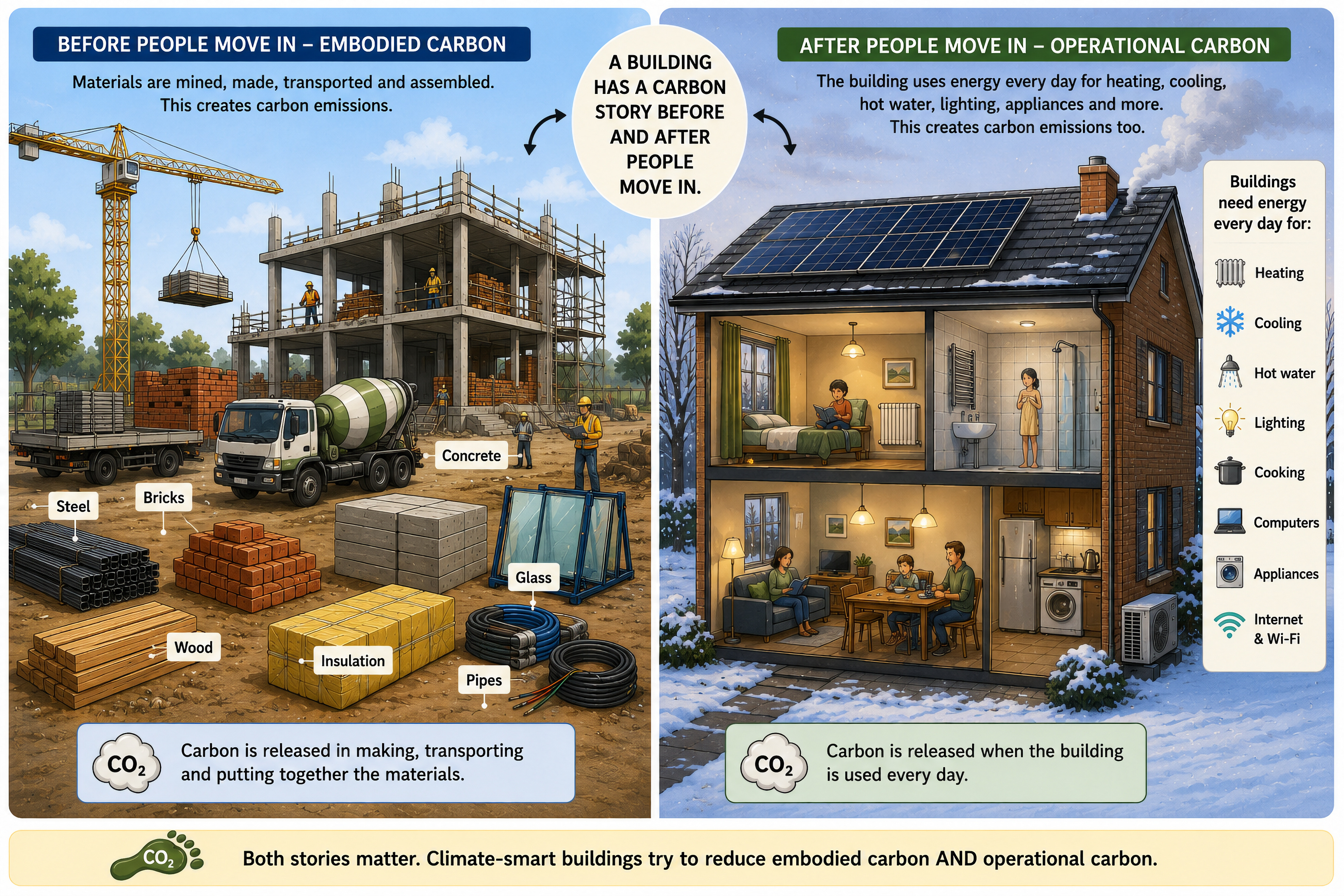
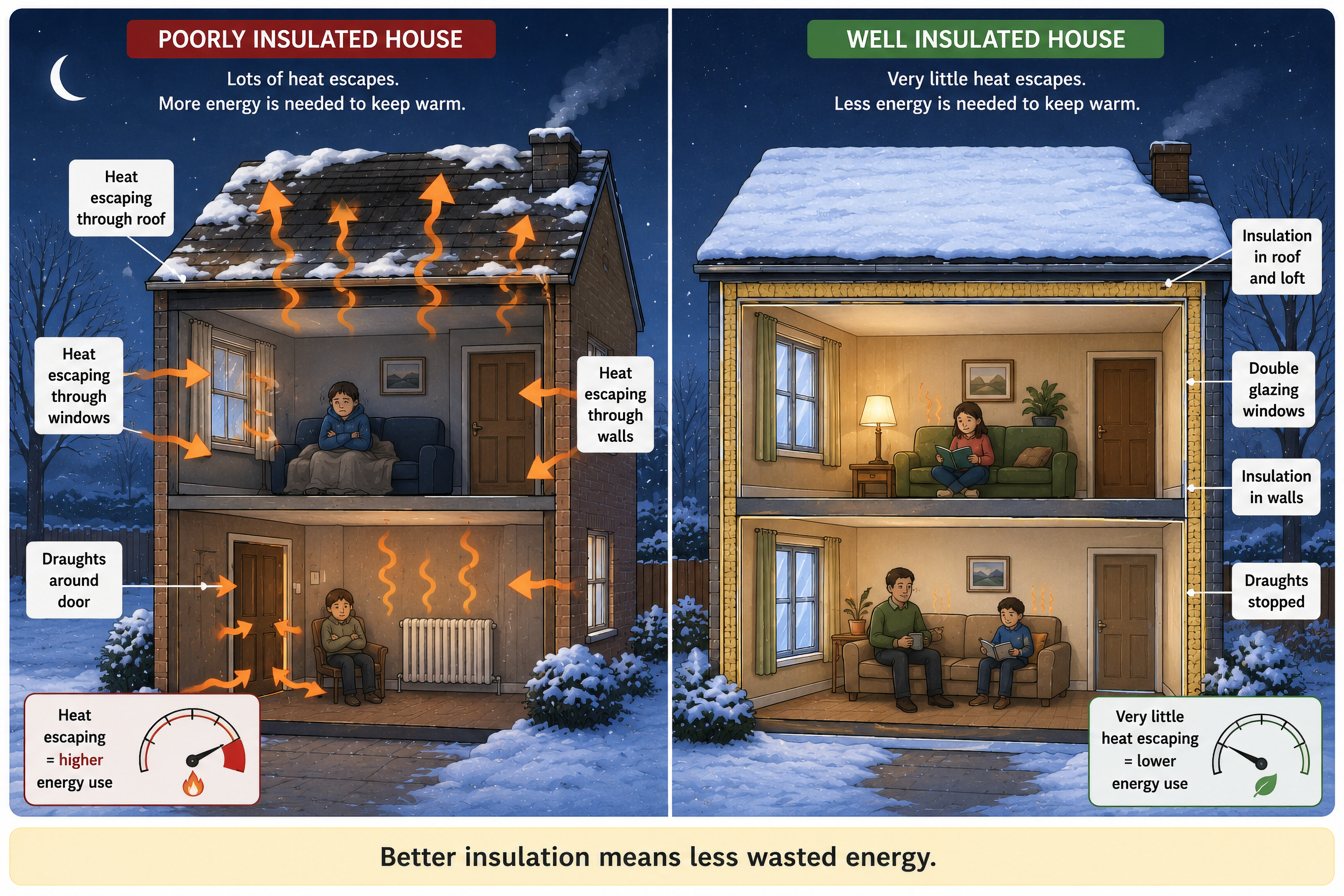
Human-made stuff now outweighs all living things on Earth, and a huge share of that mass is buildings and infrastructure. Buildings affect climate before anyone moves in because concrete, steel, glass and bricks take energy to make. They also affect climate while we use them through heating, cooling, hot water, lighting and appliances—especially when that energy comes from fossil fuels.
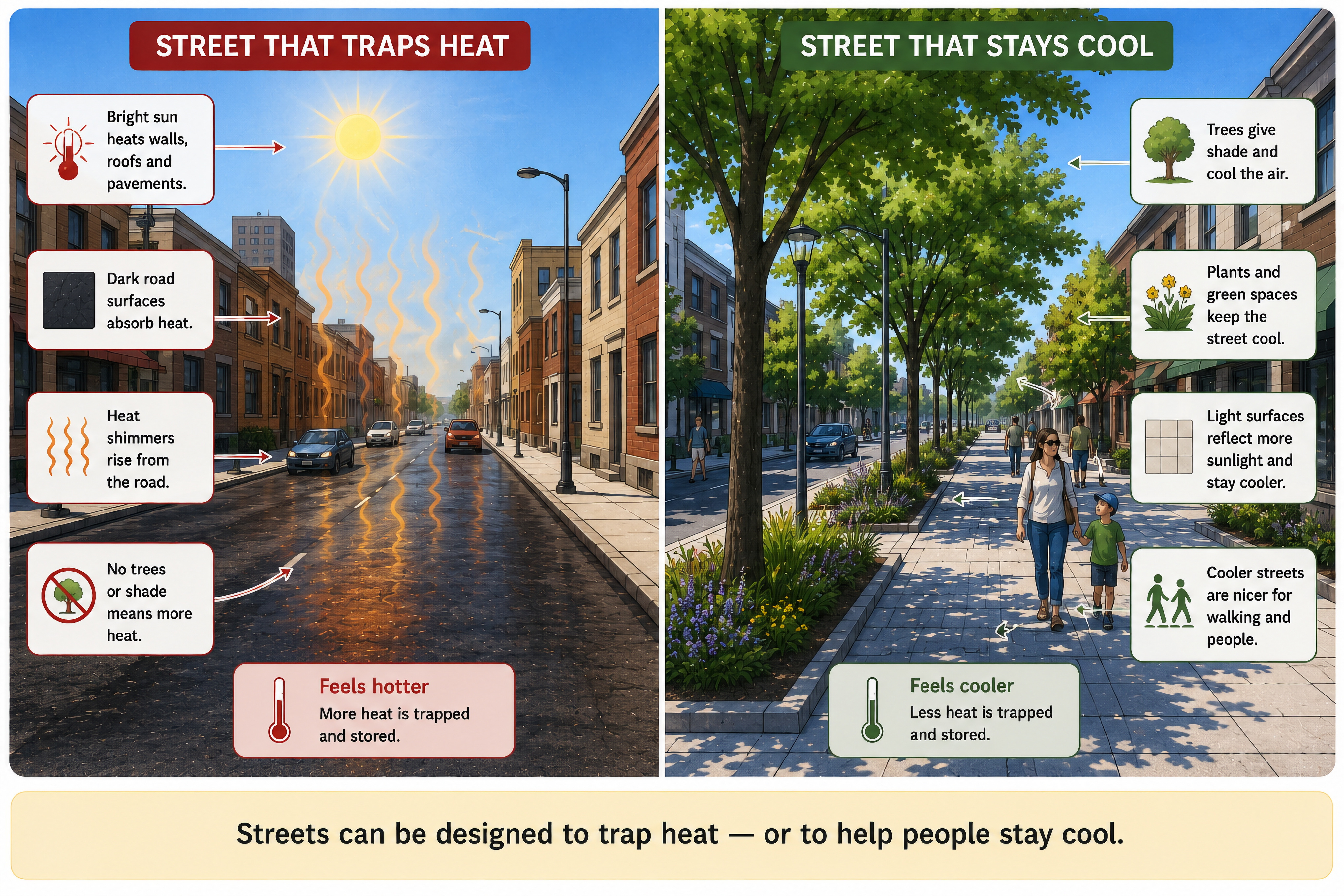
The episode also explores urban heat islands, shade, trees, green roofs, solar roofs, heat pumps, lower-carbon materials and smarter design.
One Bright Thing
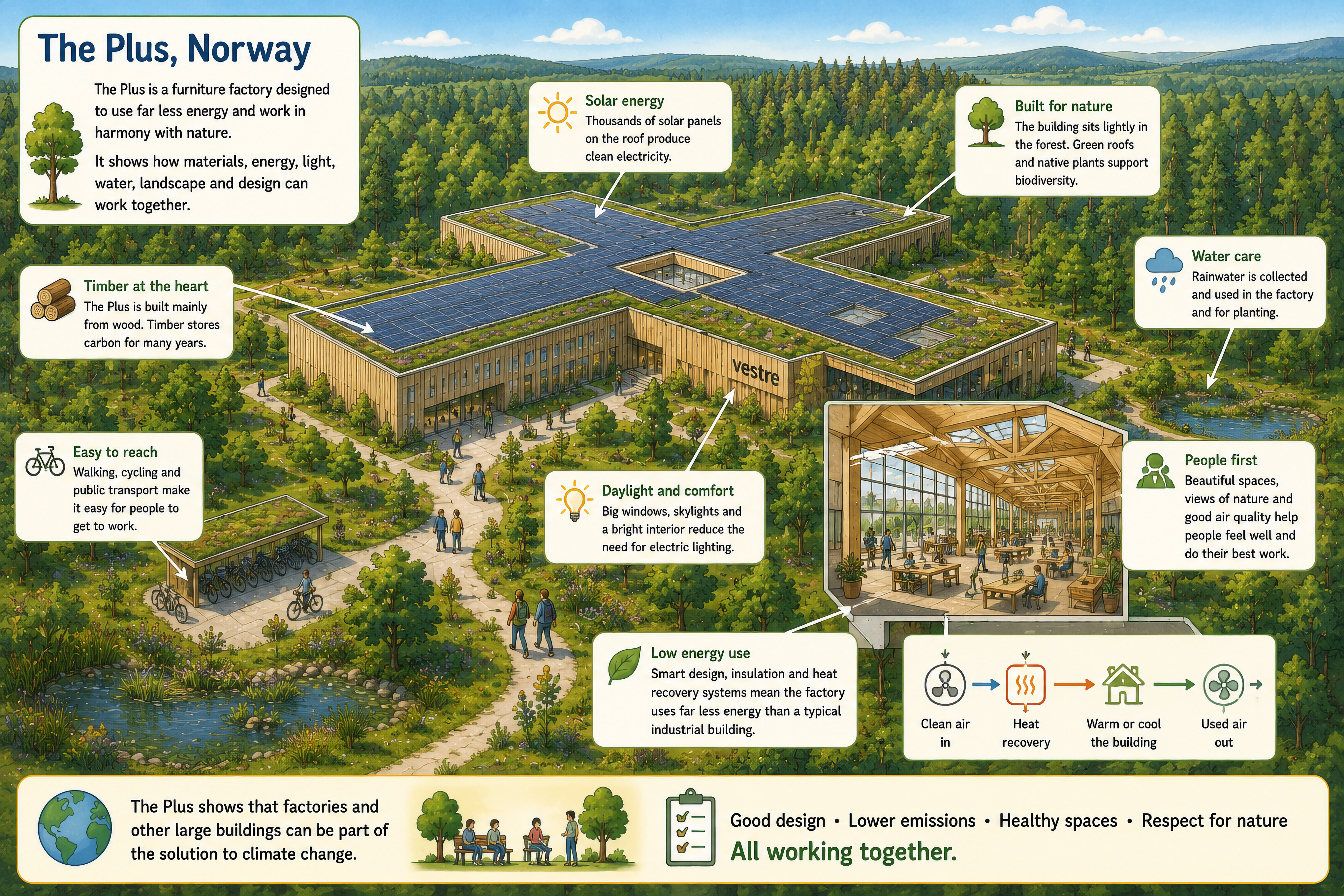
In Norway, The Plus in Magnor was designed to use much less energy than a conventional factory and generate renewable electricity from solar panels. Wood, natural light, heat recovery, rainwater thinking and landscape design help the whole building work as one system.
Key numbers
- Human-made buildings and infrastructure weigh about 1.1 trillion tonnes.
- Buildings and construction account for about 32% of global energy demand and 34% of global CO2 emissions.
- The Plus is reported to use 60% less energy than equivalent conventional factories, with nearly 900 solar panels generating about 250,000 kWh per year.
Teacher notes
A building is not simply “good” or “bad” for climate. Its footprint depends on design, materials and energy source.
Keywords: embodied carbon, insulation, renewable electricity, heat pump, urban heat island, concrete, steel, timber, solar roof, green roof.
Discussion prompts: Why does a building have a carbon footprint before anyone moves in? Why does the source of energy matter as much as the amount used? How could a school building be made cooler, cleaner or more efficient?
Sources & further reading
- Nature — Global human-made mass exceeds all living biomass
- PNAS — The biomass distribution on Earth
- UNEP / GlobalABC — Global Status Report for Buildings and Construction 2024/25
- IEA — Cement
- US EPA — Trees, vegetation and urban heat islands
- The Plus — What we aim to achieve
- Bjarke Ingels Group — The Plus