🐾 Belle’s Question
“What can kids actually do about climate change?”
💡 If you remember one thing
No single person can solve climate change alone. But small
actions,
repeated by many people, can help new ideas become normal.
🔍 What we cover
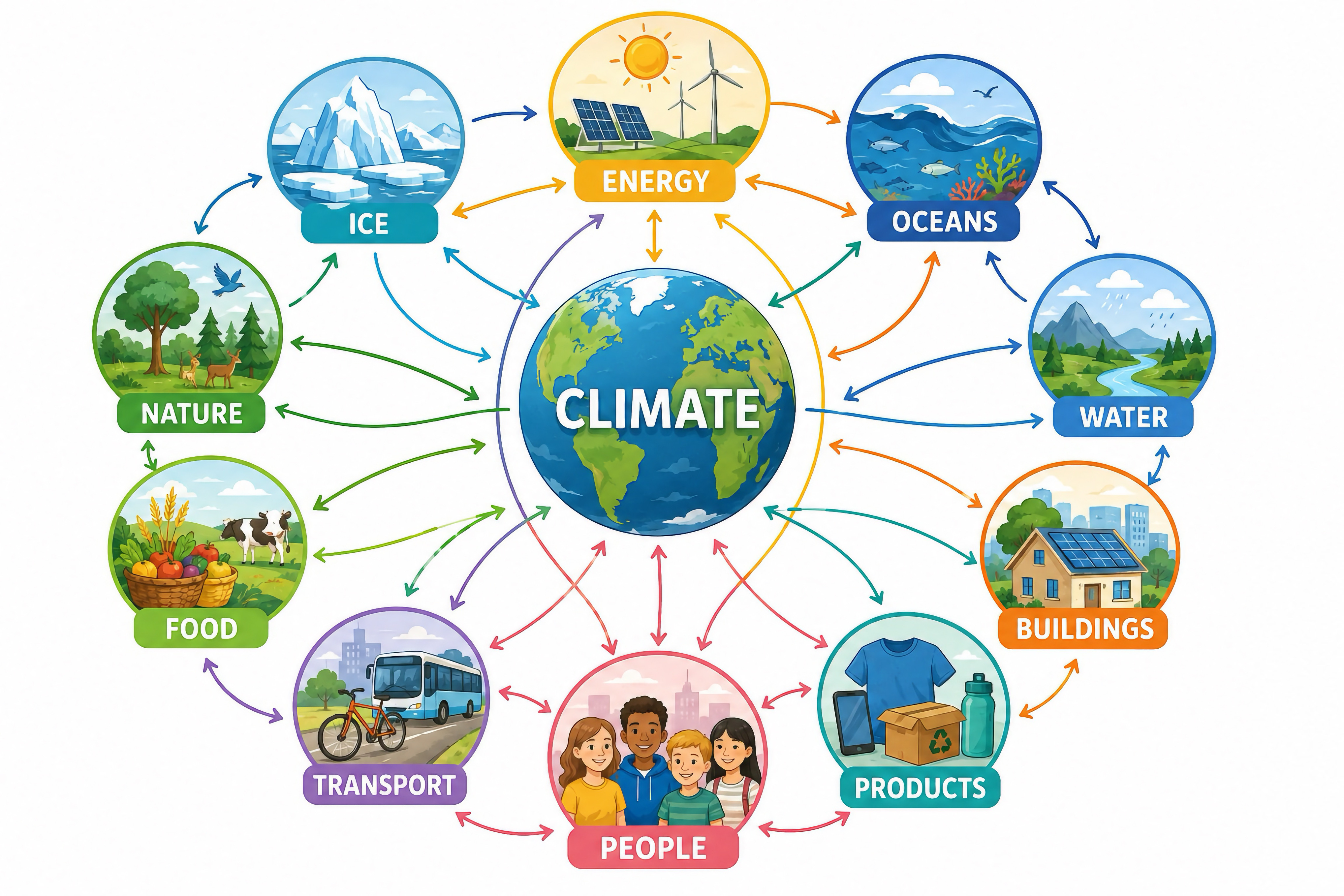
• Why climate change is connected to energy, transport, food,
buildings and industry
• Why individual actions still matter
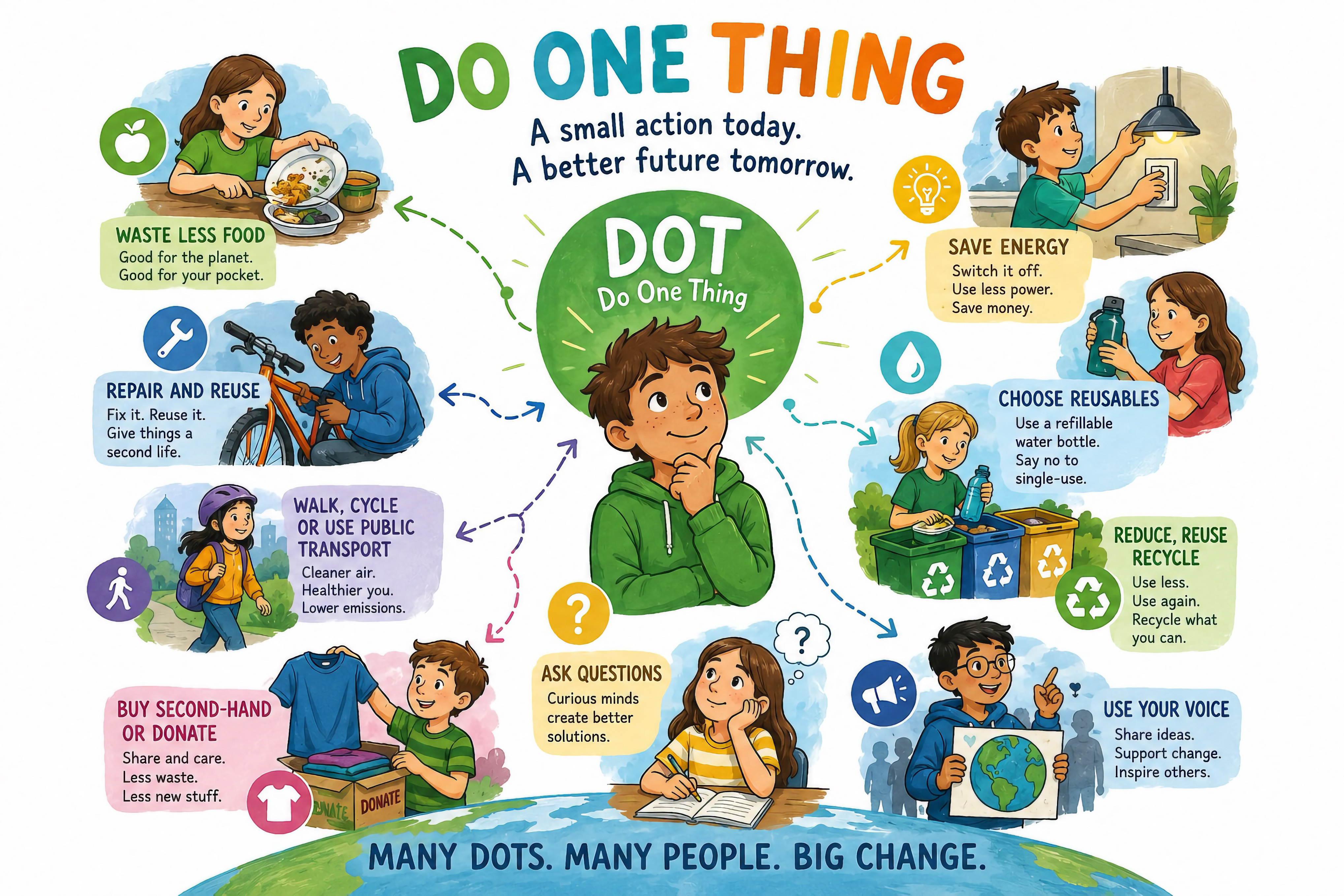
• What a DOT means: Do One Thing
• Examples of practical DOTs: wasting less food, walking some
journeys, repairing things, selling unused clothes using your voice
• Why some actions have bigger climate impacts than others
• Why climate solutions can also save money, improve health and
make life better
• Why curiosity is a climate skill
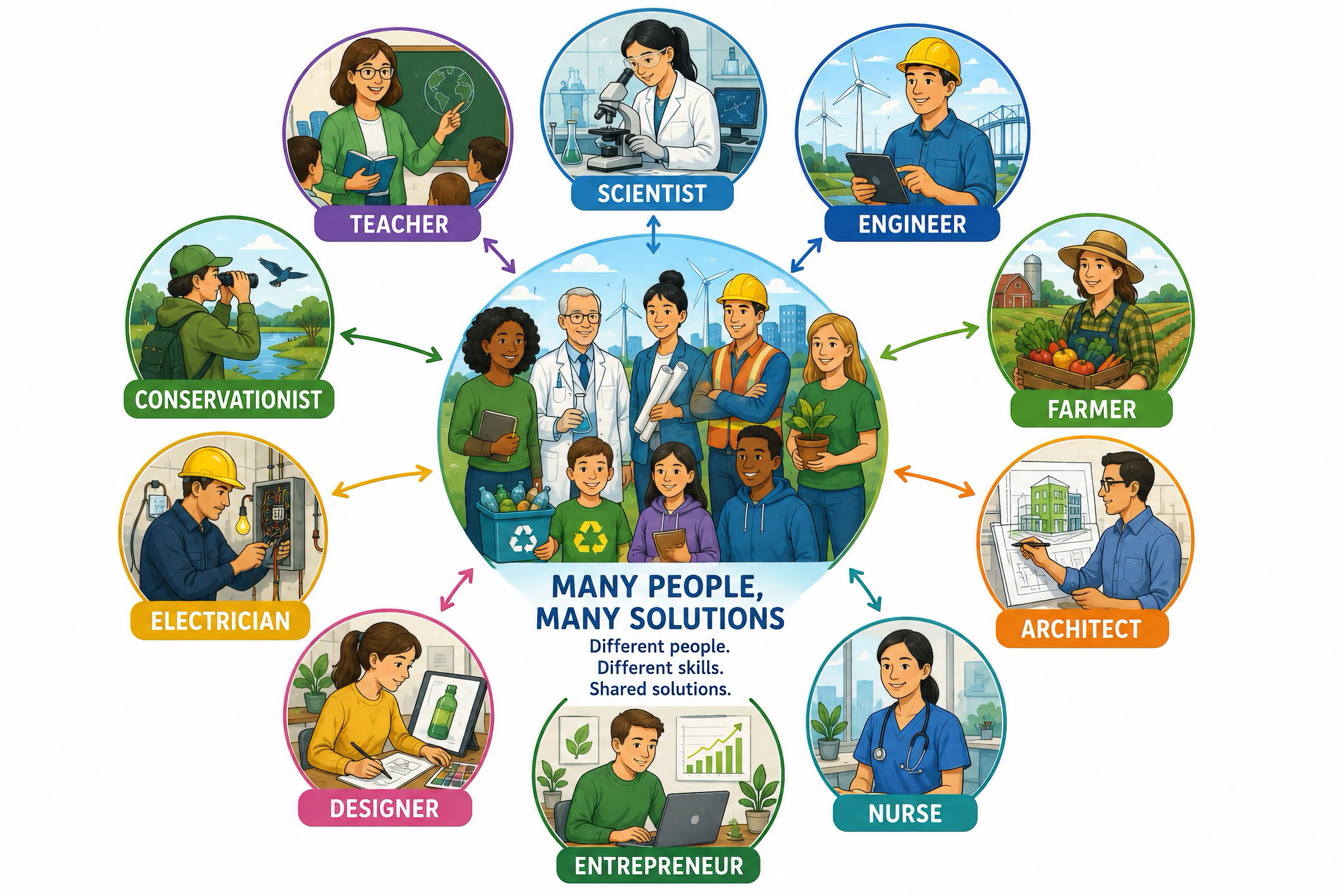
• How climate connects to future careers, from nutrition and
forestry to engineering, farming, conservation and meteorology
🌟 One Bright Thing
This week’s One Bright Thing is young people themselves.
Around the world, teenagers and young adults are already helping
shape climate solutions. In Montana, sixteen young people won a
major climate case in 2023, showing that young people can have
a voice in climate decisions. In India, young innovators developed
the Subjee- Cooler, a simple cooling system that can help keep
vegetables fresh for several days without electricity.
In Brazil, youth-led urban agriculture projects are helping grow
food closer to where people live.
Different countries. Different ideas. But the same message:
young people are not just waiting for the future. They are already
building it.
9🧑 🏫 Teacher Notes
This episode helps children understand that meaningful change
happens when people, communities, businesses and
governments all help move in a cleaner direction — and that small
practical actions can help new ideas become normal.
Useful discussion questions:
• What does DOT stand for?
• Why can small actions maYer when many people do them?
• Which DOT would be realistic for your class or school?
11• Why might wasting less food help the climate?
• How can young people use their voice constructively?
• What climate-related jobs might exist in the future?
📚 Sources & further reading
United Nations — Youth in Action
https://www.un.org/en/climatechange/youth-in-action
World Economic Forum — 9 youth-led innovations protecting the
planet. https://www.weforum.org/stories/2022/04/9-youth-led-
innovations-are-protecting-the-planet/
Climate Case Chart — Held v. State of Montana
https://www.climatecasechart.com/collections/held-v-state_2e16bti
Reuters — Montana top court says youth have right to stable climate
https://www.reuters.com/legal/montana-top-court-says-youth-have-right-stable-climate-2024-12-18
Oxfordshire County Council — Borrow and repair
https://www.oxfordshire.gov.uk/waste-and-recycling/oxfordshire-recycles/keep-items-circulation
UNEP — Green Jobs for Youth Pact.