EPISODE 5 – Trees, Carbon and Why Forests Matter
🎧 Episode 5— Show Notes
🌳 Episode title: Trees, Carbon & Why Forests Matter
🐾 Belle’s Question:
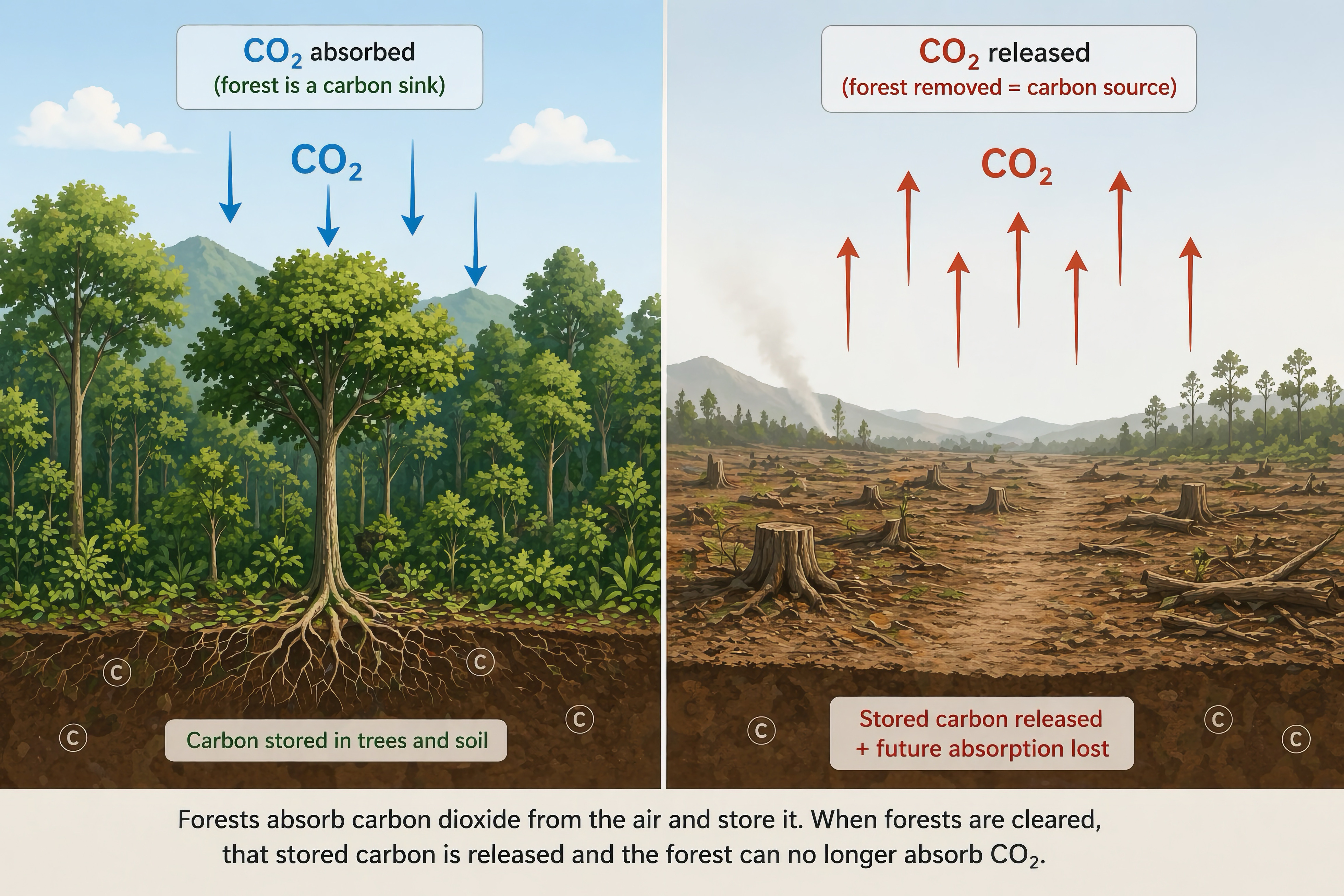
If trees absorb CO2... what happens when we cut them down?
📌 If you remember one thing:
Forests store huge amounts of carbon — cutting them down releases that carbon and removes one of nature’s best systems for taking CO2 out of the atmosphere.
🔍 What we cover
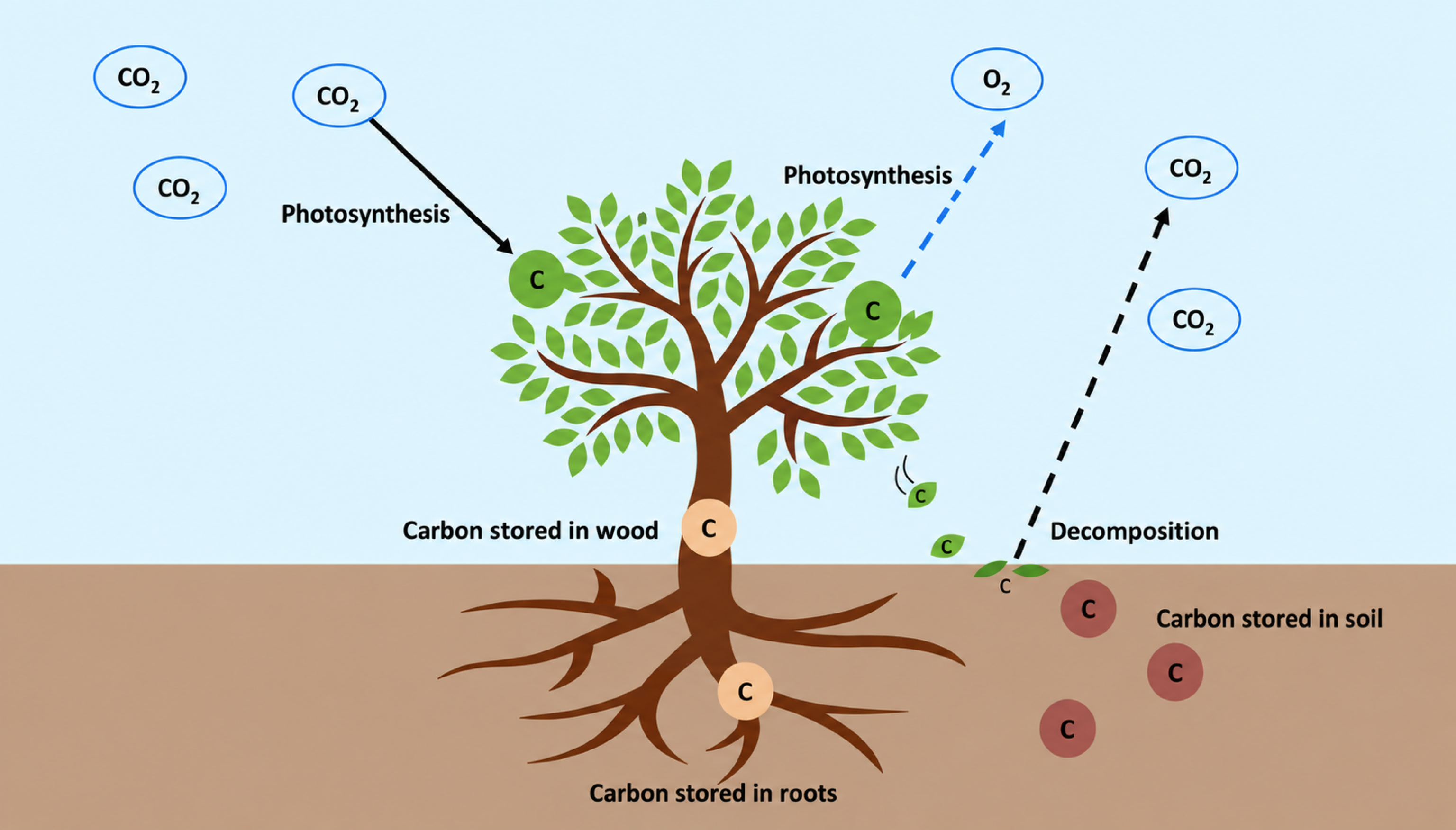
• How trees store carbon: through photosynthesis trees take CO2 from the air and store the carbon in wood, roots and soil.
• Why forests help stabilise the climate: forests are both a carbon store and a carbon remover, absorbing billions of tonnes of CO2 every year.
• Why deforestation is a “double hit”: cutting forests releases stored carbon and removes a major natural system that absorbs CO2.
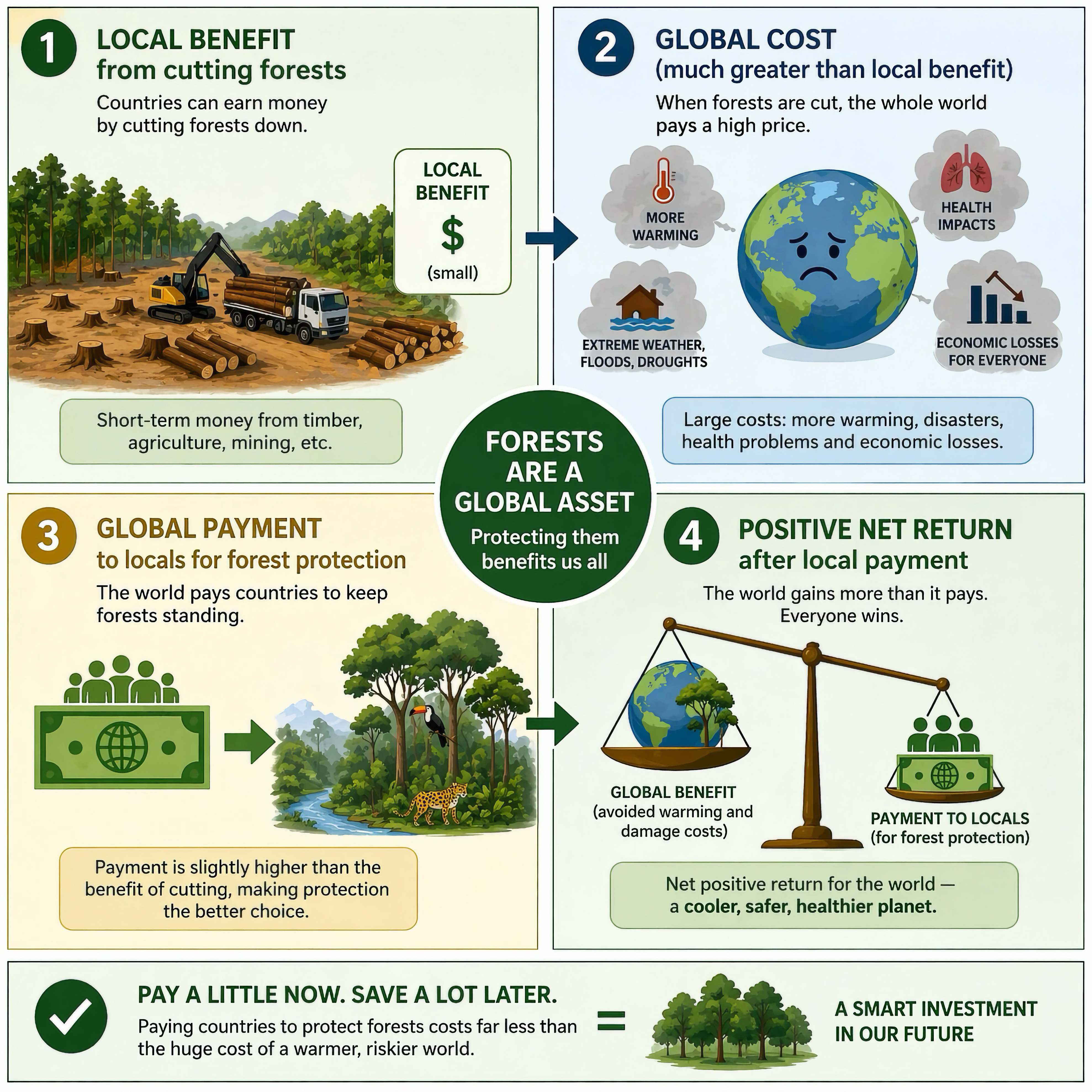
• Why deforestation still happens: forests can generate income from farming, timber or development, so economic incentives sometimes favour clearing them.
• How protecting forests could reduce emissions: protecting and restoring forests is one of the largest natural climate solutions available.
🌟 One Bright Thing:
The Tropical Forests Forever Facility (TFFF) — a proposed global fund designed to reward countries financially for protecting tropical forests.
Instead of forests only generating money when they are cut down, the idea is that countries could receive regular payments for keeping forests standing, changing the economic incentives around forest protection.
🔢 Key numbers mentioned (with sources)
🌳 Carbon stored in the world’s forests
Scientists estimate that forests store about 860 billion tonnes of carbon in trees and soils.
Source: Global Carbon Project / IPCC assessments.
🌍 Deforestation and global emissions
Land-use change, mostly deforestation, produces about 10% of global CO2 emissions.
Source: Global Carbon Project.
🌲 Global forest loss
The world has been losing roughly 10 million hectares of forest per year in recent decades.
That is about the size of Portugal each year.
Source: FAO Global Forest Resources Assessment.
🌱 Potential climate benefit of forest protection
Protecting and restoring forests could reduce global emissions by several billion tonnes of CO2 per year.
Source: IPCC Working Group III mitigation pathways.
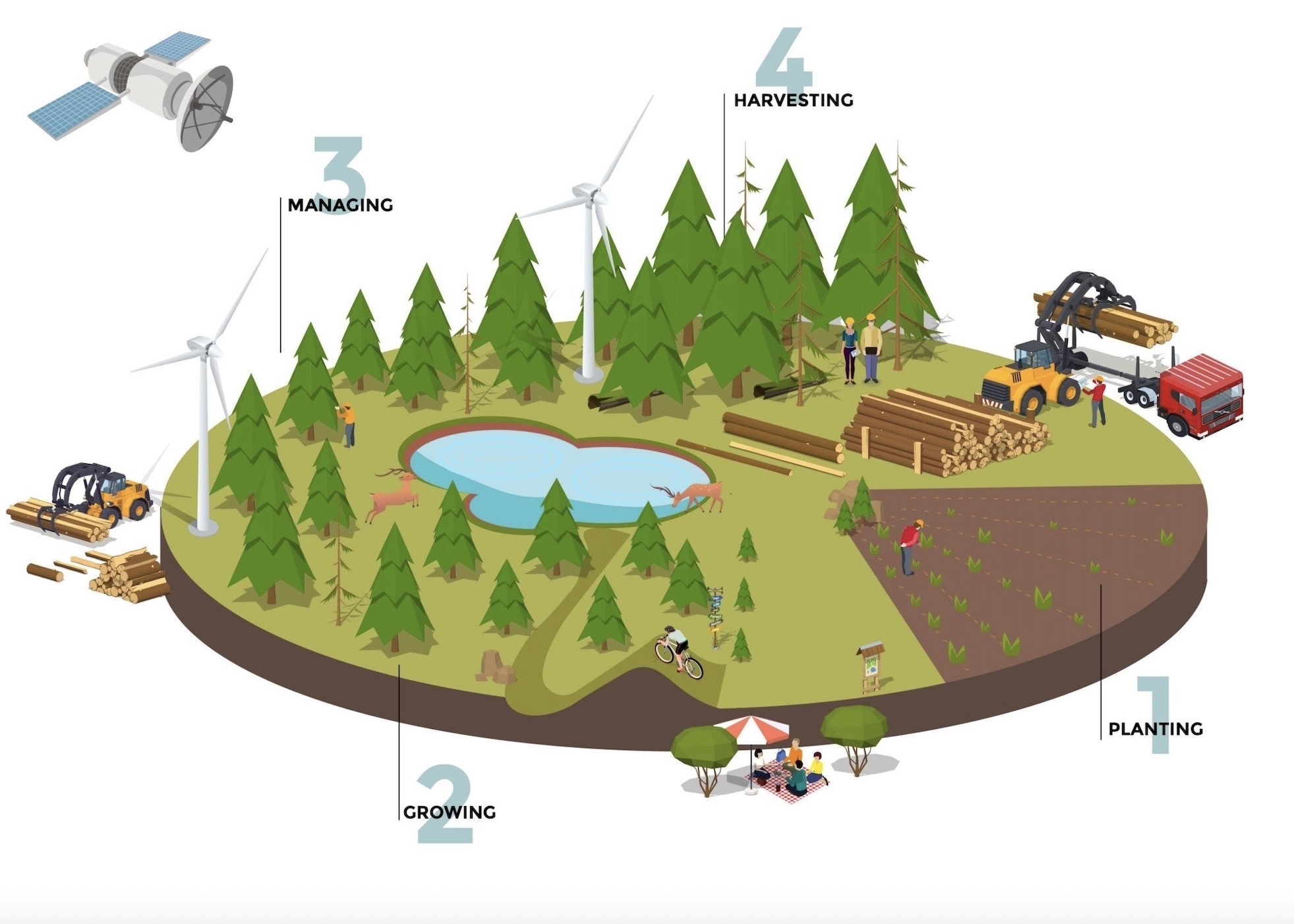
🌳 Responsible forestry
The Forest Stewardship Council (FSC) certifies forests managed in environmentally responsible ways.
As of 2025:
• 170+ million hectares of forest are FSC-certified
• 68,000+ supply-chain certificates track responsibly sourced timber products
Source: Forest Stewardship Council global statistics.
🌟 One Bright Thing (episode takeaway)
Ideas like the Tropical Forests Forever Facility aim to flip the economics of forests.
Instead of forests earning money mainly when they are cut down, countries could begin earning income for protecting them.
That could help align economic incentives with climate protection.
📚 Sources & further reading
• IPCC – AR6 Working Group III (Mitigation of Climate Change)
https://www.ipcc.ch/report/ar6/wg3/
• FAO – Global Forest Resources Assessment
https://www.fao.org/forest-resources-assessment
• Global Carbon Project – Global Carbon Budget
https://www.globalcarbonproject.org
• Forest Stewardship Council – Global certification statistics
• Tropical Forests Forever Facility (COP30 proposal)
👩🏫 Optional Teacher Notes (1-minute prep)
🎯 Learning objective:
Students understand how forests store carbon, why deforestation increases emissions, and how economic incentives affect forest protection.
🔑 Keywords:
photosynthesis, carbon storage, deforestation, land-use change, carbon sink, forest protection
💬 Discussion prompts:
1.Why might farmers or companies clear forests even if it harms the climate?
2.Why is deforestation sometimes called a “double hit” for climate change?
3.What might make protecting forests financially attractive for countries and communities?