EPISODE 4 – Methane: The Super-Powered Greenhouse Gas
🎧 Episode 4 — Show Notes
🧪 Episode title: Methane: The Super-Powered Greenhouse Gas
🐾 Belle’s Question:
If CO2 is the problem... why do people worry about methane?
📌 If you remember one thing:
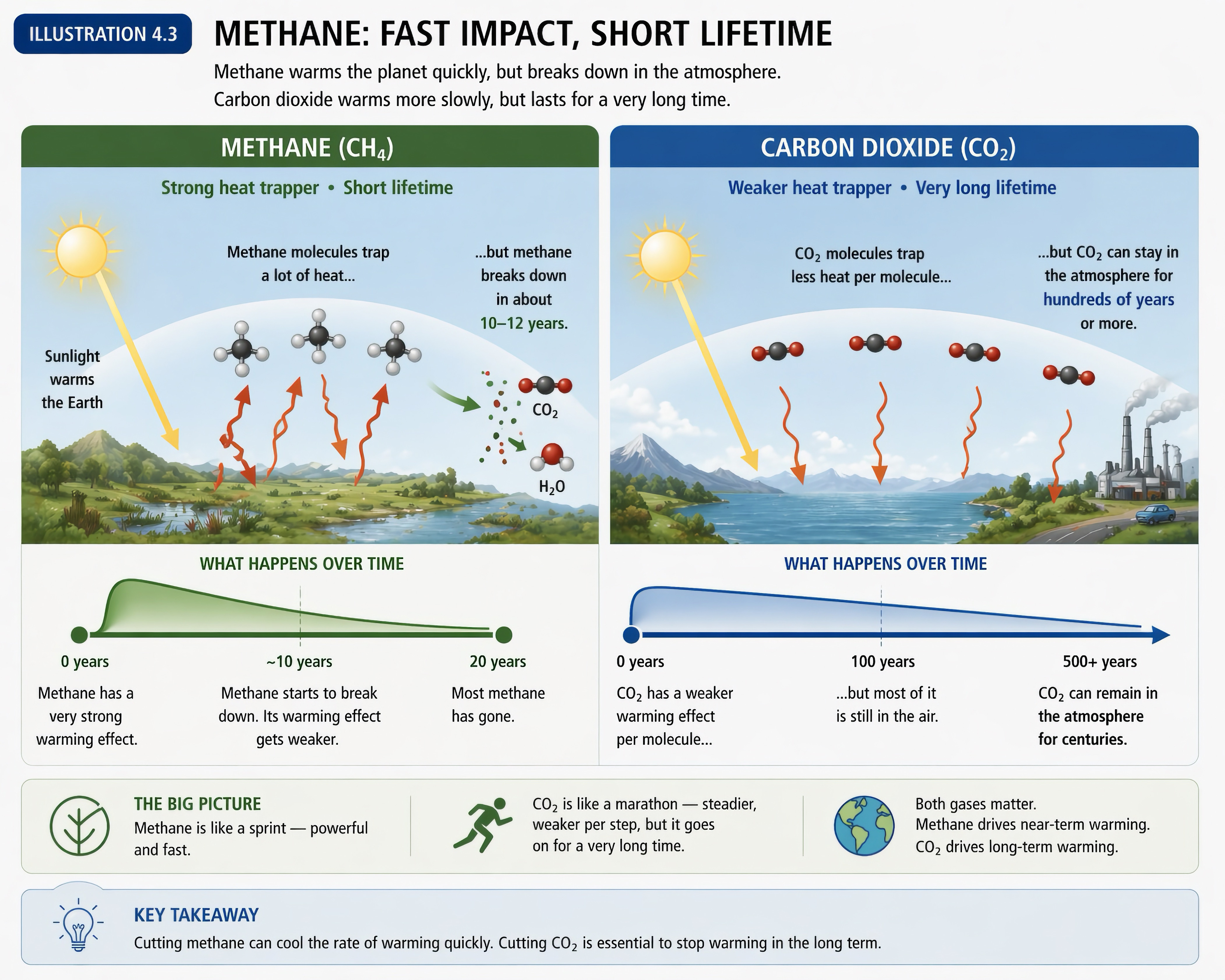
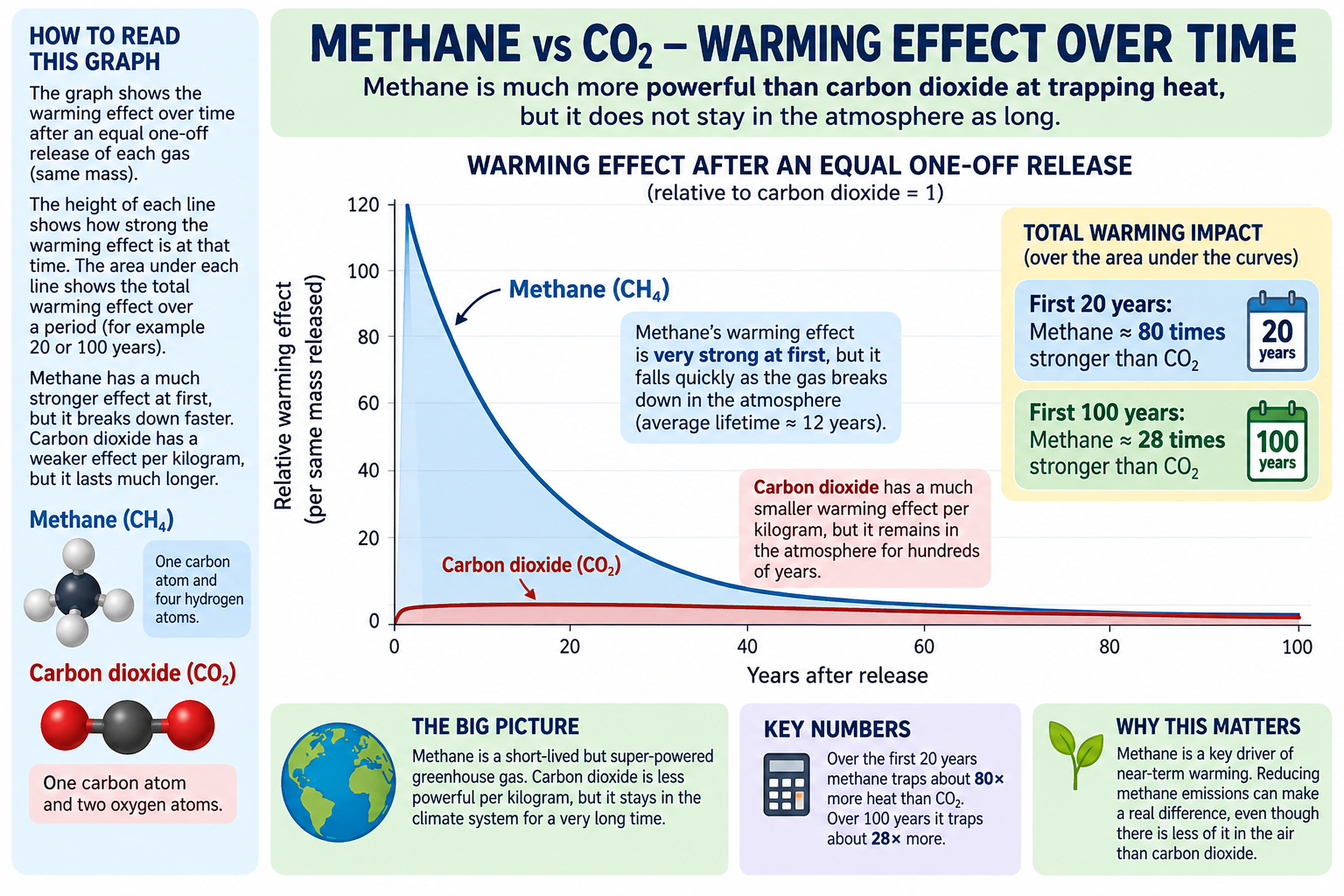
Methane traps much more heat than CO2 — but it doesn’t last as long.
🔍 What we cover
• Why methane matters: it’s a very strong heat-trapping gas, but it stays in the atmosphere for a much shorter time than CO2.
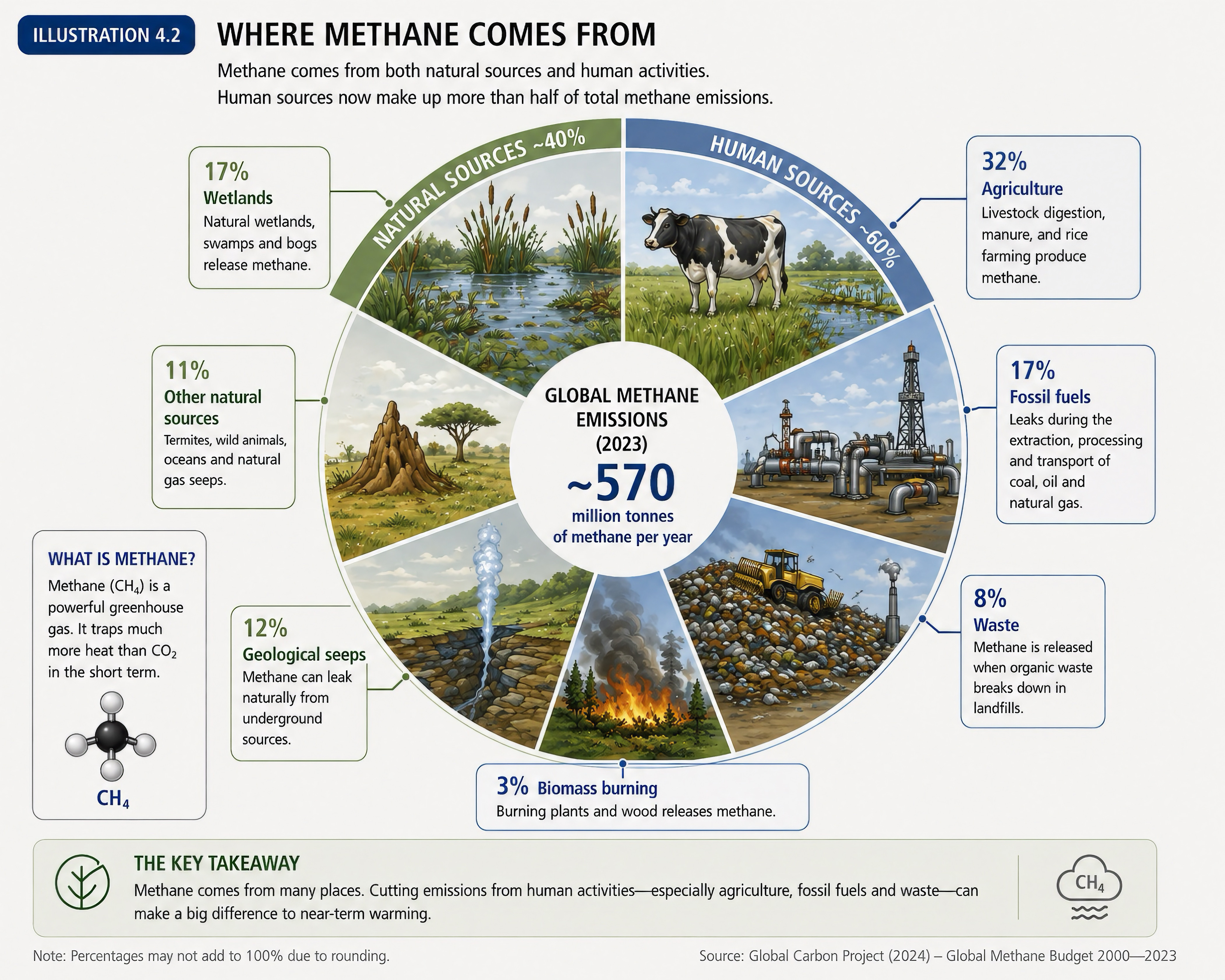
• Where methane comes from (global picture): most human-caused methane comes from fossil fuels, farming, and waste.
• Why landfills make methane: compost has oxygen; landfill often doesn’t — so different microbes break food down and produce methane.
• Why cows are linked to methane: cows are ruminants with a multi-compartment stomach; methane from digestion mainly comes out as belching (enteric fermentation).
🌟 One Bright Thing:
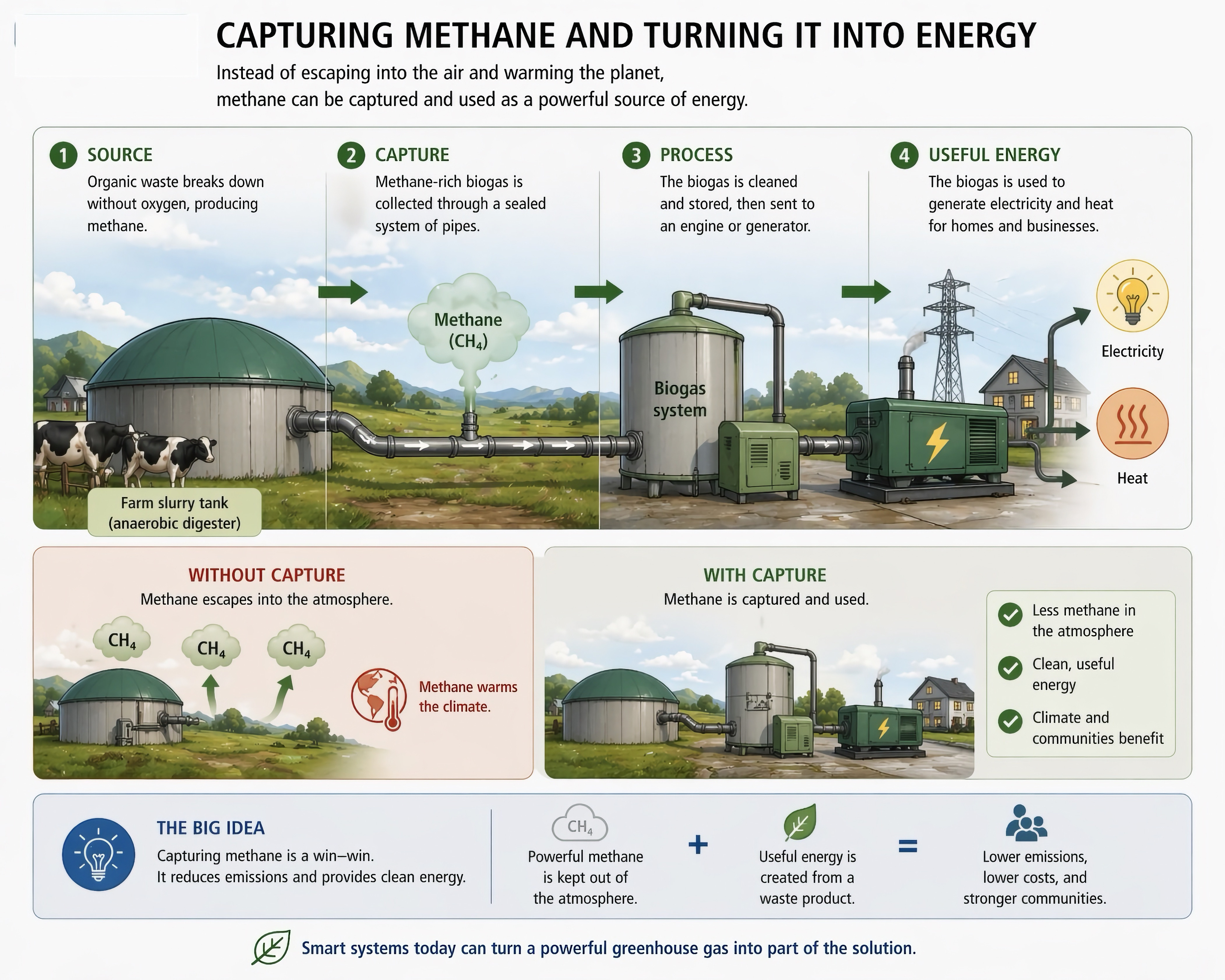
Capturing landfill methane and turning it into electricity — with examples from the US, UK, and Australia.
🔢 Key numbers mentioned (with sources)
🌍 Global methane sources (UN Global Methane Assessment headline shares):
• Oil & gas: ~23%
• Coal mining: ~12%
• Waste (landfills + wastewater): ~20%
• Livestock (enteric + manure): ~32%
• Rice cultivation: ~8%
Source: UNEP press release summarising the Global Methane Assessment.
🐄 Cows: burps vs farts
Most methane from cattle is released by belching (enteric fermentation), not flatulence.
Source: NASA Climate FAQ.
📊 Enteric methane as share of global human-caused GHG (CO2e)
A widely used summary estimate puts enteric methane from ruminants at about 5.5% of total global human-caused greenhouse-gas emissions (CO2e).
Source: Climate & Clean Air Coalition.
⚡ Landfill gas → electricity (US)
~16.5 billion kWh/year — roughly the electricity use of ~1.5 million homes.
Source: Resources for the Future.
🇬🇧 Landfill gas → electricity (UK)
Landfill electricity generation fell below 3,000 GWh in 2023 (after 3,101 GWh in 2022).
Homes comparison uses Ofgem typical household electricity use: 2,700 kWh/year.
🇦🇺 Landfill gas → electricity (Australia)
• Mugga Lane (ACT): ~50,000 MWh/year — ~10,800 homes (ACT Government).
• Clayton (VIC): ~53 GWh/year — nearly 10,000 homes (EDL).
🌟 One Bright Thing (episode takeaway)
Landfills (and some farms) can capture methane and use it as biogas to generate electricity — turning a greenhouse-gas problem into useful energy, and cutting emissions at the same time.
📚 Sources & further reading
• UNEP – Global Methane Assessment
• NASA Climate FAQ – Cow belching vs flatulence
• Climate & Clean Air Coalition – Enteric methane brochure
https://www.ccacoalition.org/sites/default/files/resources/brochure_enteric-logos.pdf
• Resources for the Future – Renewable Energy from Landfills
https://www.resources.org/archives/renewable-energy-from-landfills/
• Ofgem – Typical household electricity use
• uSwitch – UK renewable electricity statistics (landfill series)
https://www.uswitch.com/gas-electricity/studies/renewable-statistics/
• ACT Government – Mugga Lane landfill gas-to-energy
• EDL – Clayton landfill gas-to-electricity
https://edlenergy.com/project/clayton/
👩🏫 Optional Teacher Notes (1-minute prep)
🎯 Learning objective: Students can explain why methane is powerful, why it’s shorter-lived than CO2, and why landfill + cows are major methane sources.
🔑 Keywords: methane, greenhouse gas, oxygen, microbes, compost, landfill, ruminant, rumen, enteric fermentation, biogas
💬 Discussion prompts:
1.Why does compost usually not create lots of methane, but landfill can?
2.What’s one way a community can reduce methane from waste?
Quick quiz
- Does methane generally remain in the atmosphere for a shorter or longer time than CO₂?
- Why can buried food waste produce methane when oxygen is scarce?
- Does most methane from a cow’s digestion leave through belching or flatulence?
- How can capturing landfill methane help?
Teacher answers
- A shorter time, although methane has a strong warming effect while present.
- Microbes break down organic material without oxygen and can produce methane.
- Belching.
- It reduces methane escaping to the atmosphere and can provide useful energy. Burning it still produces CO₂, and preventing leaks remains important.