EPISODE 6 – The Super-Charged Sky Sponge
🎧 Episode 6— Show Notes
🌧️ Episode title: The Supercharged Sky Sponge
🐾 Belle’s Question:
How can climate change mean bigger floods and worse droughts?
📌 If you remember one thing:
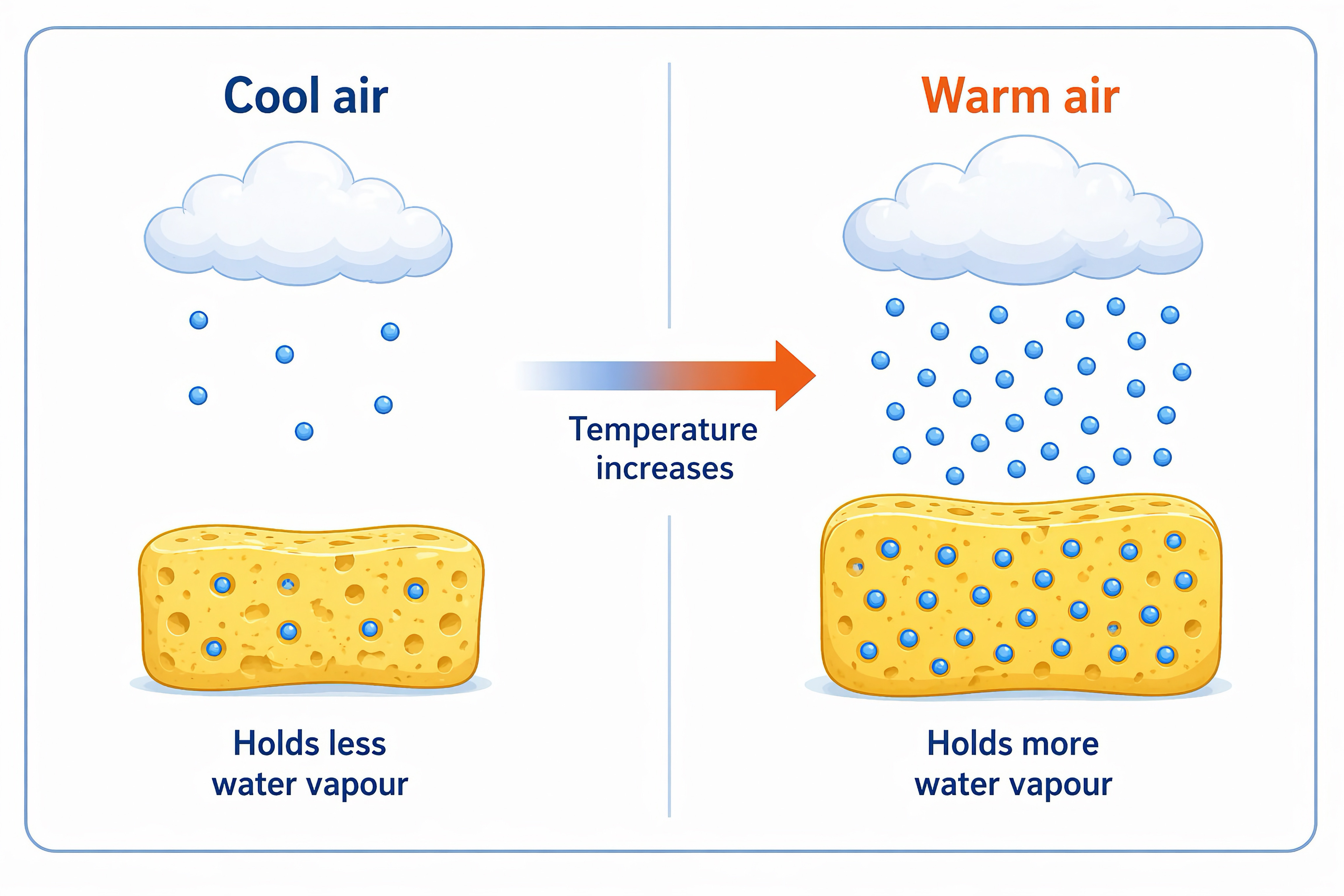
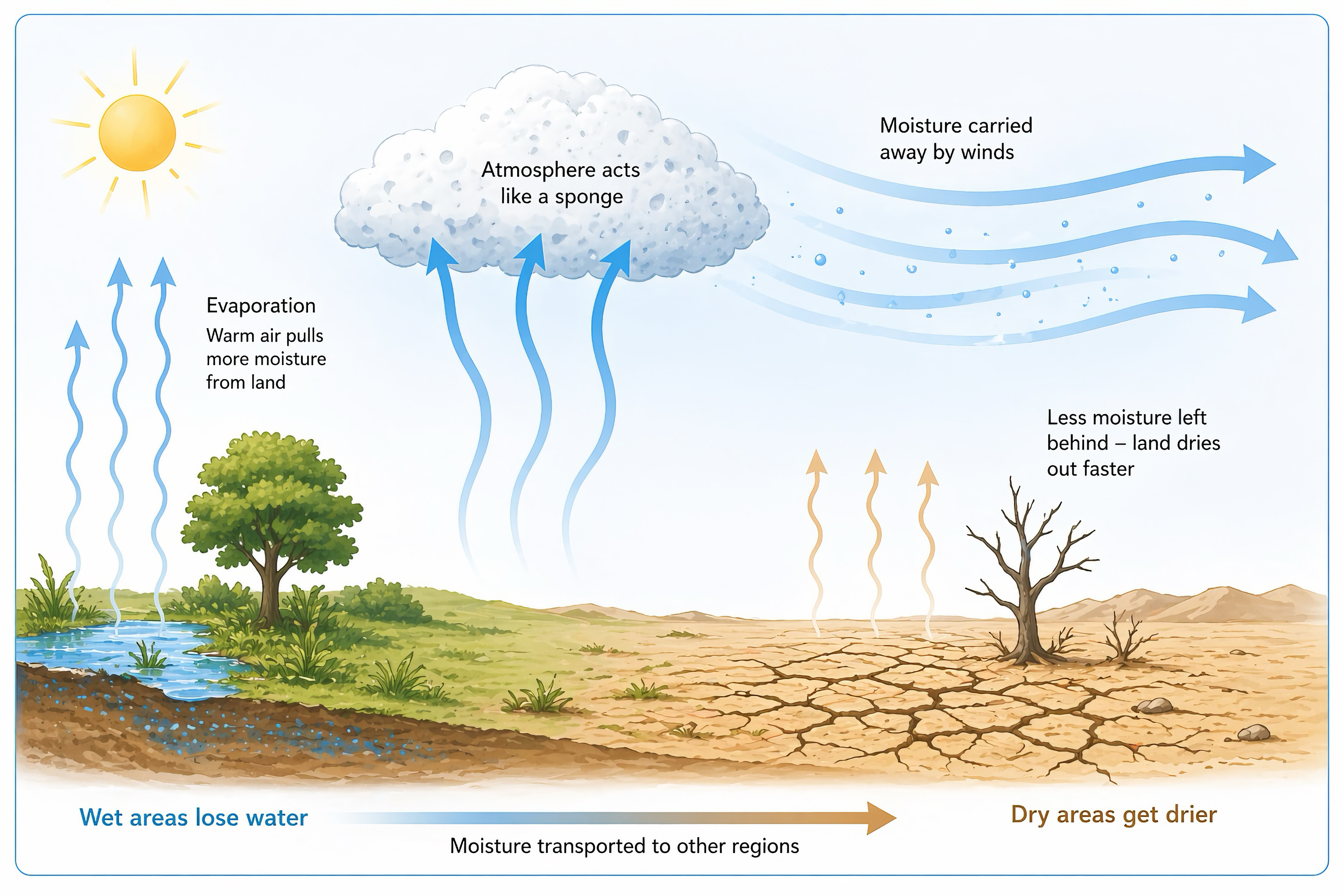
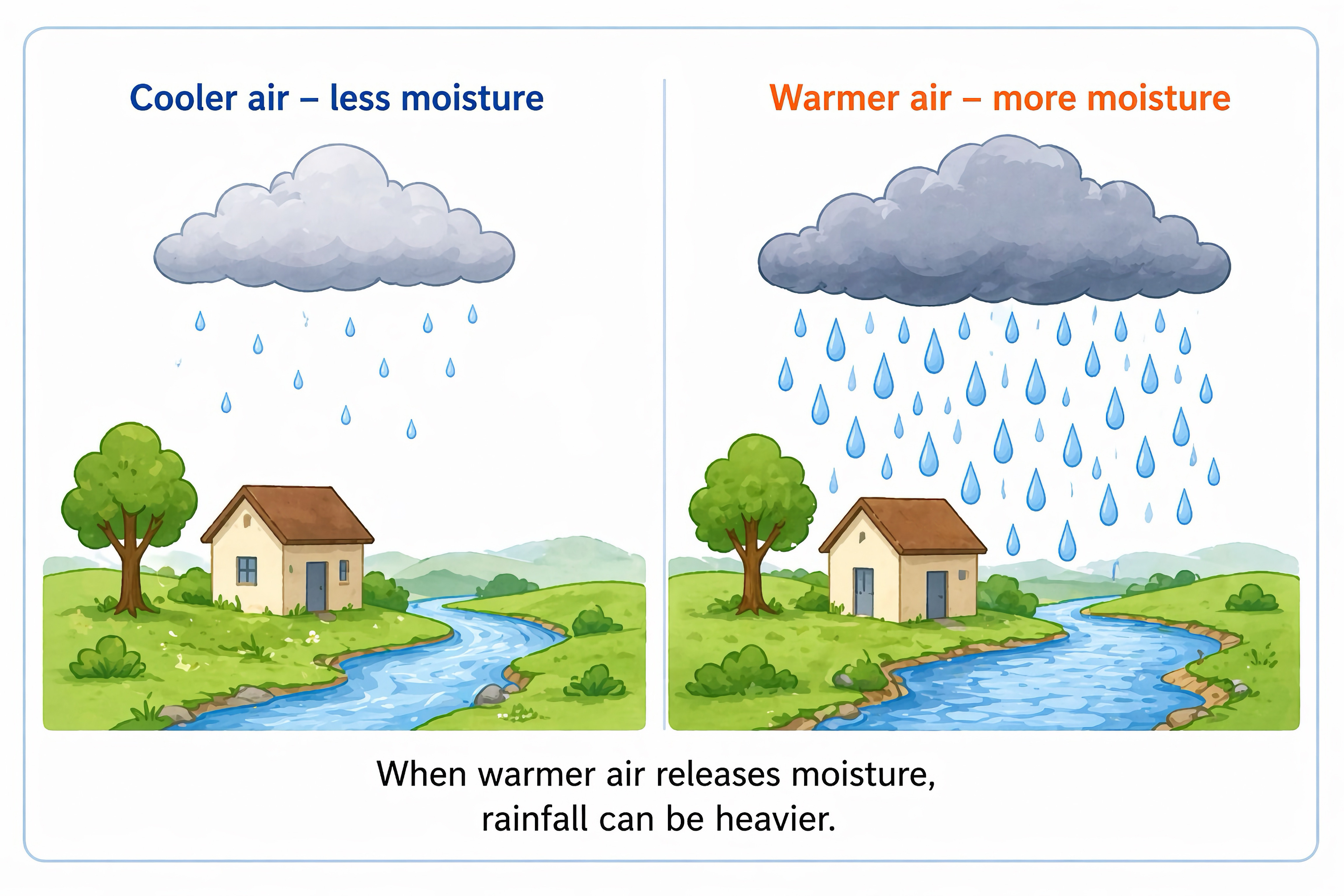
Warmer air acts like a bigger sponge — it can hold more water vapour, release heavier rain, and also dry land out faster. Climate change speeds up the water cycle and makes its swings stronger.
🔍 What we cover
• How the water cycle works: water evaporates from oceans, lakes and soil, forms clouds, falls as rain or snow, and flows back to rivers and seas.
• Why climate change does not create a new water cycle: it speeds up the one we already have.
• Why warmer air is like a bigger sponge: for every 1°C of warming, air can hold about 7% more water vapour.
• Why that matters for storms: when storm systems have more moisture available, they can produce much heavier rain in a short time.
• Why dry places can get drier too: warmer air pulls more moisture from soils, plants, rivers and lakes, increasing drying.
• How air circulation affects rainfall: Earth’s giant air belts help explain why some regions become drier as climate patterns shift.
• Why climate change can bring both floods and droughts: scientists describe this as an intensified water cycle — not wetter everywhere, not drier everywhere, but stronger swings.
🌟 One Bright Thing:
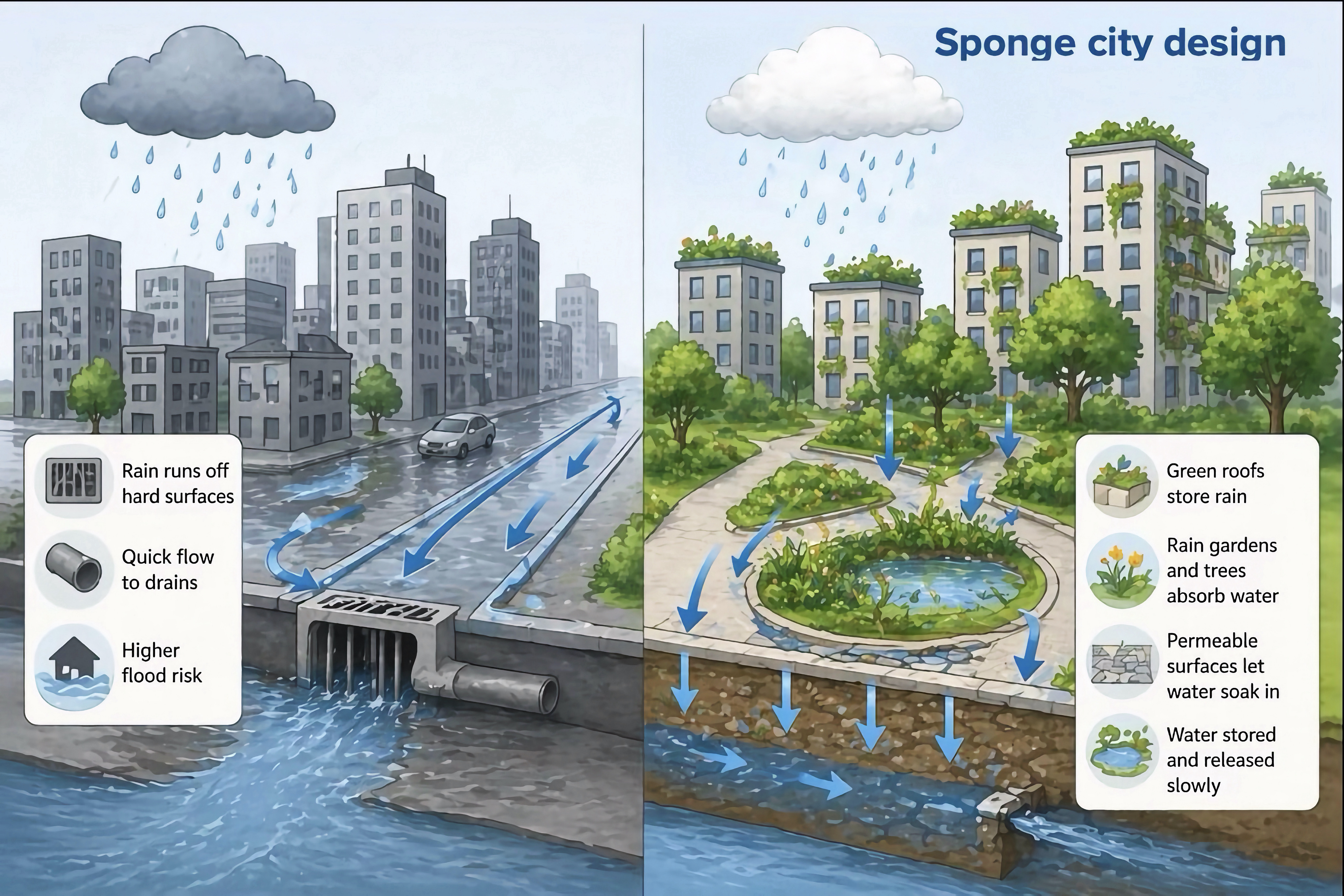
Sponge cities — cities designed to absorb, store and slowly release rainwater instead of rushing it straight into drains. Using green roofs, rain gardens, permeable pavements, wetlands and parks that can temporarily store stormwater, sponge-city design helps reduce flooding while making cities greener and more resilient.
🔢 Key numbers mentioned (with sources)
💧 Water vapour and warming
For every 1°C of warming, air can hold about 7% more water vapour.
Source: IPCC AR6 Working Group I / NASA Climate / NOAA Climate.gov.
🌍 Intensified water cycle
Climate change is intensifying the water cycle, increasing the risk of heavier rainfall in some situations and faster drying in others.
Source: IPCC AR6 Summary for Policymakers / Met Office.
🌍 Dry belts and deserts
Many major deserts sit around 30° north and 30° south beneath descending dry air.
Source: NASA Earth Observatory / IPCC AR6 Chapter 8.
🏙️ Sponge-city design
Sponge-city approaches include green roofs, rain gardens, permeable pavements, wetlands and parks that double as flood basins. Examples mentioned include Wuhan, Shanghai, Copenhagen and Rotterdam.
Source: Copenhagen Cloudburst Management Plan / Rotterdam climate adaptation sources / supporting sponge-city research.
👩🏫 Teacher Notes (1-minute prep)
🎯 Learning objective:
Students understand how warming intensifies the water cycle, why this can increase both heavy rainfall and drought risk, and how sponge-city design can help communities adapt.
🔑 Keywords:
water cycle, water vapour, evaporation, drought, flooding, atmospheric circulation, sponge city, permeable surfaces
💬 Discussion prompts:
1. Why can warmer air lead to both heavier rainfall and faster drying?
2. Why does climate change intensify the water cycle rather than create a new one?
3. What features could make a school or town behave more like a sponge during heavy rain?
📚 Sources & further reading
• IPCC AR6 Working Group I — The Physical Science Basis
https://www.ipcc.ch/report/ar6/wg1/
• IPCC AR6 Summary for Policymakers
https://www.ipcc.ch/report/ar6/wg1/resources/spm-headline-statements/
• NASA Climate — Water Vapor & Climate
https://climate.nasa.gov/news/2910/water-vapor-confirmed-as-major-player-in-climate-change/
• NOAA Climate.gov — Climate Change & Heavy Rainfall
https://www.climate.gov/news-features/understanding-climate/climate-change-heavy-precipitation
• Met Office (UK) — Climate Change & Rainfall
https://www.metoffice.gov.uk/weather/climate-change/effects-of-climate-change
• NASA Earth Observatory — Hadley Circulation
https://earthobservatory.nasa.gov/features/Hadley
• Copenhagen Cloudburst Management Plan
https://en.klimatilpasning.dk/copenhagen/adaptation-projects/cloudburst-management-plan/
• Rotterdam Climate Adaptation Strategy
https://www.rotterdamclimateinitiative.nl/en