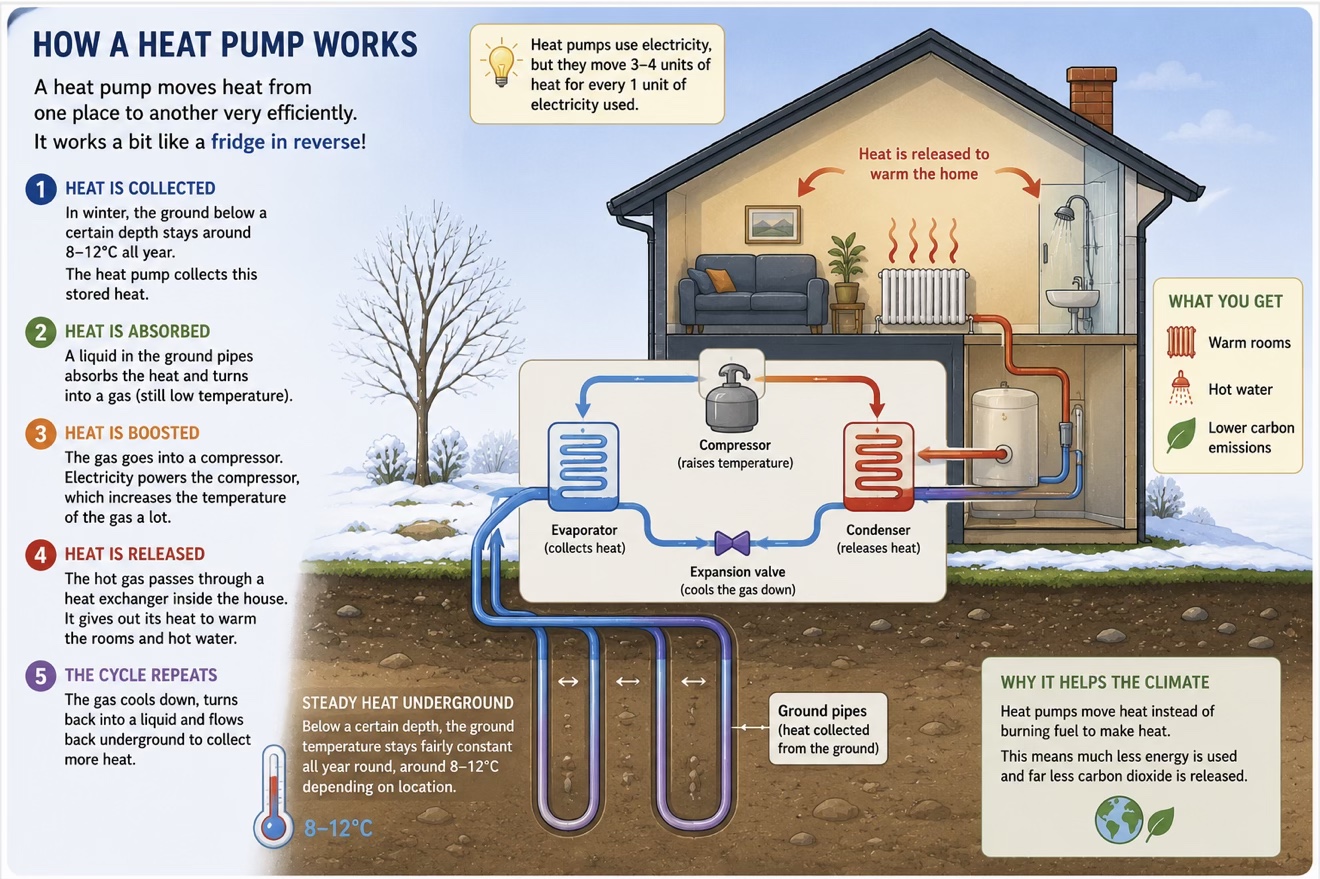
Illustration 15.5
How a heat pump works
A ground-source heat pump moves heat into a home. It uses electricity; it does not generate electricity.
Download printable sheetDownload imageSeries 2 · Episode 2 · Video podcast
Scheduled for on YouTube and Spotify. Can we power our lives without burning coal, oil or gas—and keep electricity dependable on calm nights?
Explore the show notes and teaching resources below, including discussion prompts, a classroom activity and guidance for teachers. Find more free teaching resources at theclimateclassroom.org.
Free Series 2 · Episode 2 classroom pack
4 printable illustrations, a six-question multiple-choice quiz and a separate teacher answer sheet. The complete 6-page PDF uses landscape A4 for illustrations and portrait A4 for the quiz and answers.
For pupils, print the quiz separately. The last page of the complete pack contains answers. Print at actual size or fit to page, with automatic orientation.
Illustration 15.5
A ground-source heat pump moves heat into a home. It uses electricity; it does not generate electricity.
Download printable sheetDownload image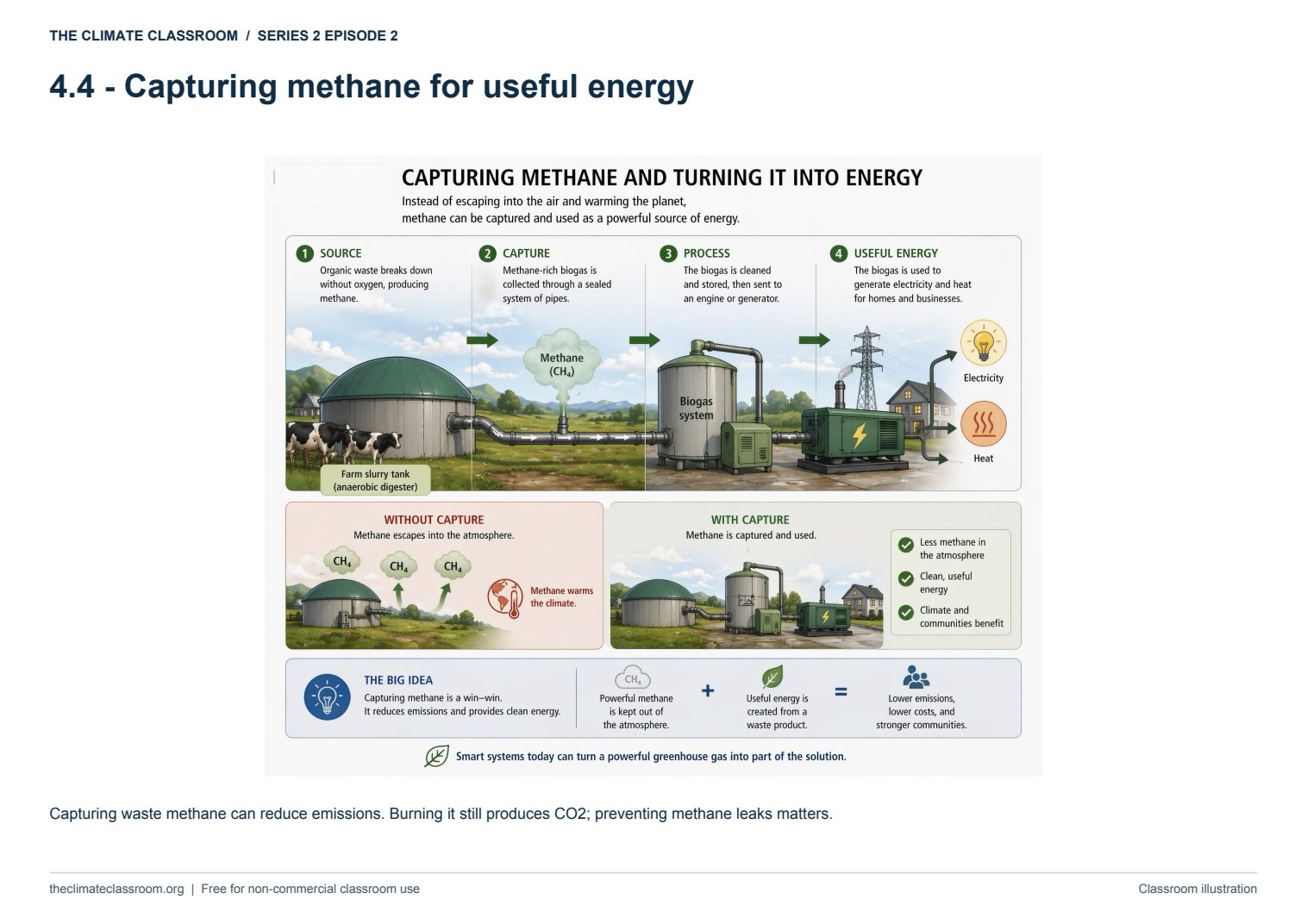
Illustration 4.4
Capturing waste methane can reduce emissions. Burning it still produces CO2; preventing methane leaks matters.
Download printable sheetDownload image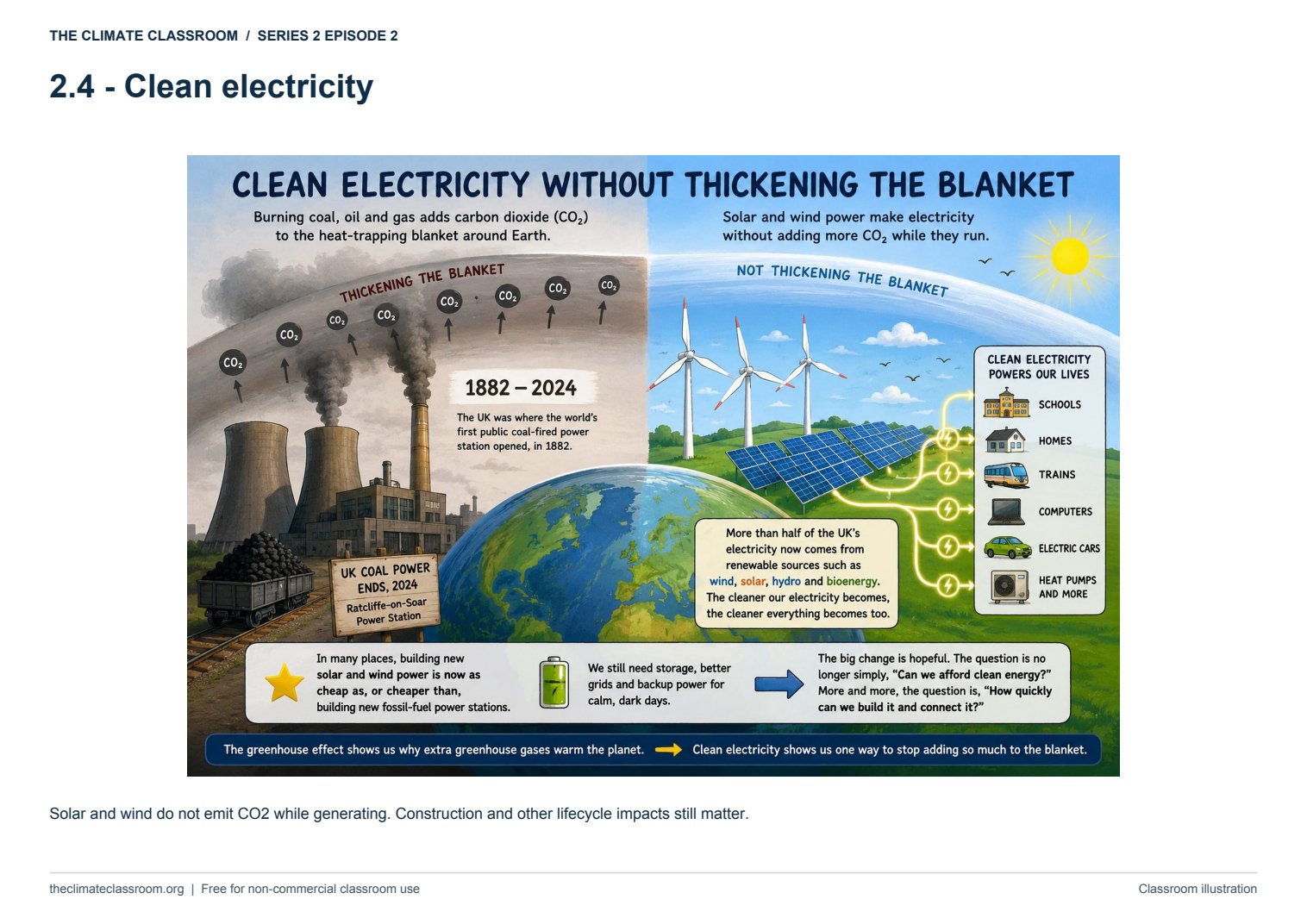
Illustration 2.4
Solar and wind do not emit CO2 while generating. Construction and other lifecycle impacts still matter.
Download printable sheetDownload image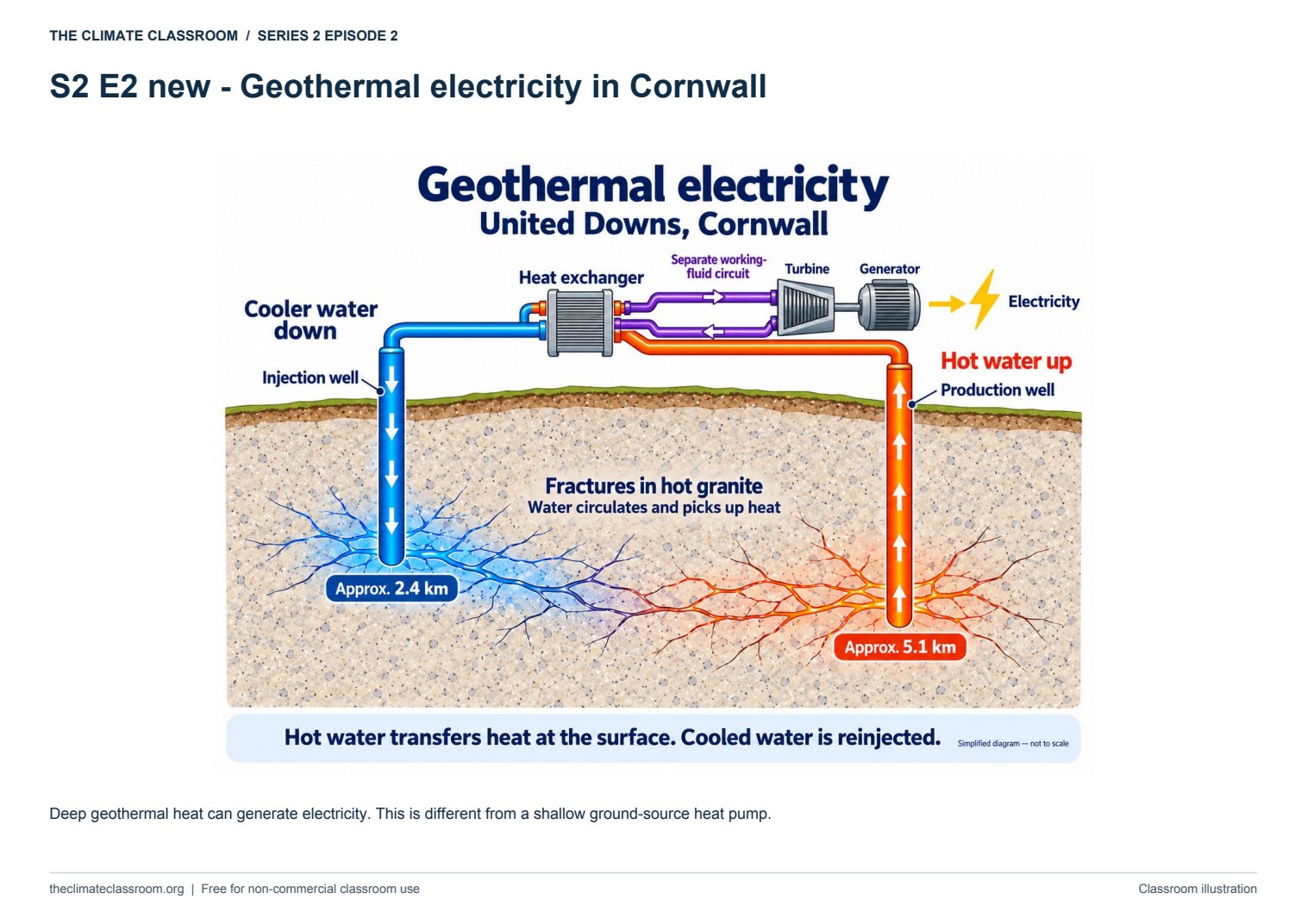
New classroom diagram
Deep geothermal heat can generate electricity. This is different from a shallow ground-source heat pump.
Download printable sheetDownload imageFree to download and print for non-commercial classroom use. Sources and artwork credits are included in the teacher guidance. Book Illustrations 2.4, 4.4 and the supplied Chapter 15 heat-pump artwork are included, with a geothermal chart derived from the episode’s video poster.
Building directly on Core Episodes 3 and 4, this episode asks whether we can obtain the energy we need without burning fossil fuels. Can we power our lives without burning coal, oil or gas? It distinguishes electricity generation from the direct burning of fuels, explains how electrification can replace many fossil-fuelled machines, and introduces a varied clean- electricity system, the sources that can supply cleaner electricity, from sunlight and wind to moving water, underground heat and nuclear energy.
Belle asks the crucial question: what happens when the Sun isn’t shining and the wind isn’t blowing? The answer brings together four approaches: storing energy, connecting places, choosing when to use electricity, and including sources that can keep working day and night.
One Bright Thing visits United Downs in Cornwall, where heat from deep granite is generating electricity. The story then travels further afield—from geothermal possibilities in Scotland and northeast England to Iceland, where around nine out of ten homes use geothermal heating, and countries already generating electricity from Earth’s heat.
Explain how different energy sources and four complementary approaches can provide dependable electricity while reducing the need to burn fossil fuels. Distinguish geothermal heating from geothermal electricity generation.
Fossil fuel; greenhouse gas; electricity; electrification; renewable energy; low-carbon energy; solar; wind; hydroelectricity; tidal energy; nuclear energy; geothermal energy; electricity grid; battery; pumped storage; reservoir.
Draw an imaginary town on a calm evening after sunset. Ask pupils to show how it could still receive electricity, using stored energy, connections to other places and sources that can operate through the night. Add one activity that could safely wait until electricity is more plentiful.
“Clean” and “low-carbon”: “Clean electricity” is accessible shorthand for electricity with low greenhouse-gas emissions. No technology is free of environmental impacts across construction, operation and disposal.
Nuclear energy: Nuclear power is low-carbon but generally classed as non-renewable because conventional nuclear fuels are finite and are not replenished on human timescales. Mining alone is not the defining distinction: renewable technologies also require mined materials.
Storage and reliability: Batteries and pumped storage hold energy supplied earlier; they are not additional primary energy sources. Storage has limited capacity and loses some energy. Reservoir output depends on water availability, and all power stations need maintenance.
Choosing when to use electricity: The cleanest time varies with the local electricity supply and weather. Overnight electricity is not automatically cleaner; a solar-rich system may have abundant low-carbon electricity during the day.
Geothermal geography: Underground temperature varies with location and depth. Around 200°C at five kilometres is possible in favourable locations, not a worldwide rule. Scotland and northeast England have promising resources, including heat-producing granites, but potential resources should not be confused with operating electricity plants.
Interpreting the examples: Iceland’s approximately 90% figure concerns home heating. National Grid describes United Downs as capable of generating up to 3 MW, sufficient for up to 10,000 homes; this is a project estimate, rather than a count of homes with dedicated connections.