EPISODE 7 – The Ocean Engine
🎧 Episode 7— Show Notes
🌊 Episode title: The Hidden Heat: Why the Ocean Takes the Hit
🐾 Belle’s Question: If the planet is warming where the heat actually go?
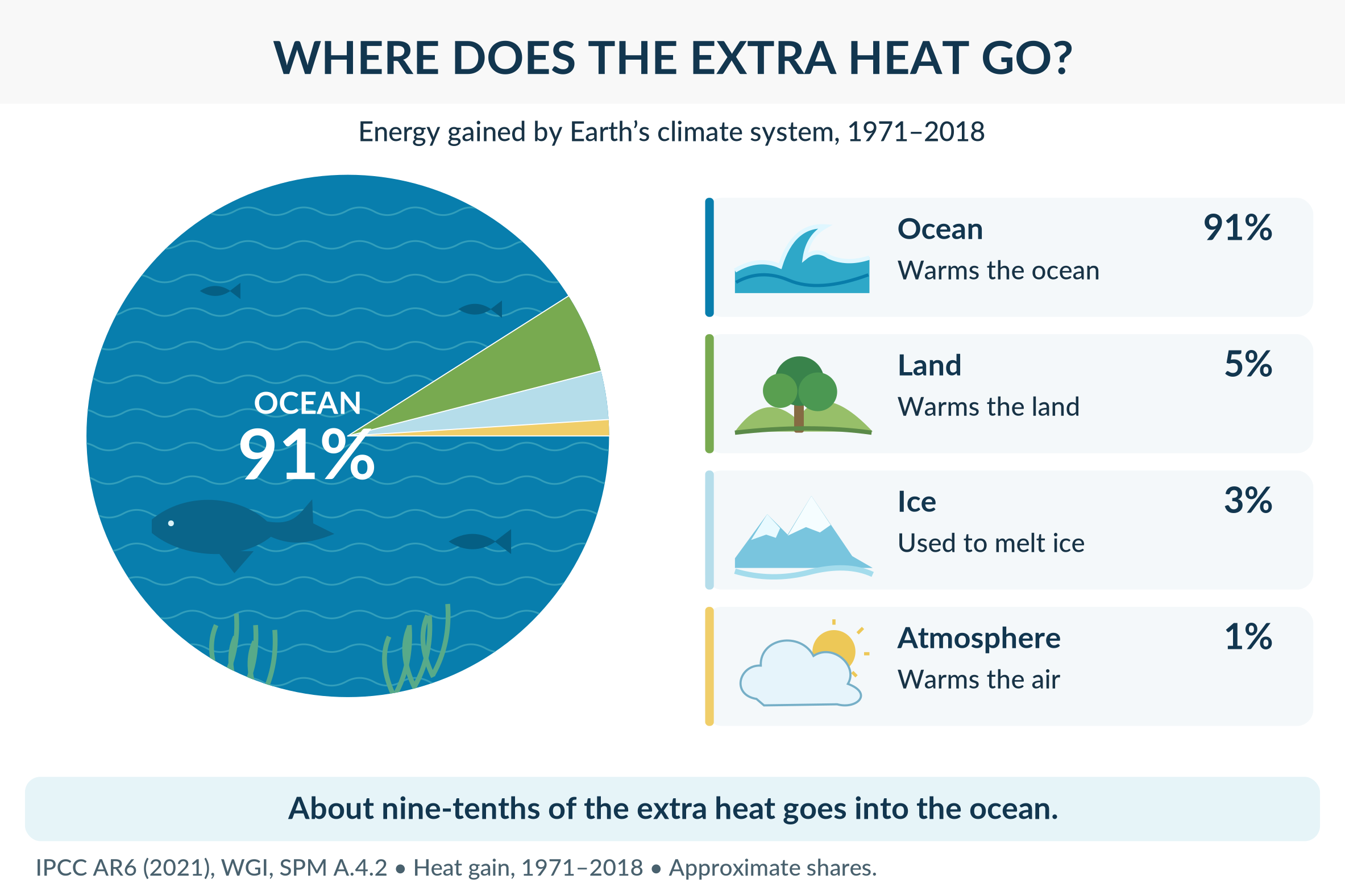
📌 If you remember one thing: The oceans absorb more than 90% of the extra heat — and that changes everything.
🔍 What we cover
• Why the ocean absorbs most of the extra heat trapped by greenhouse gases.
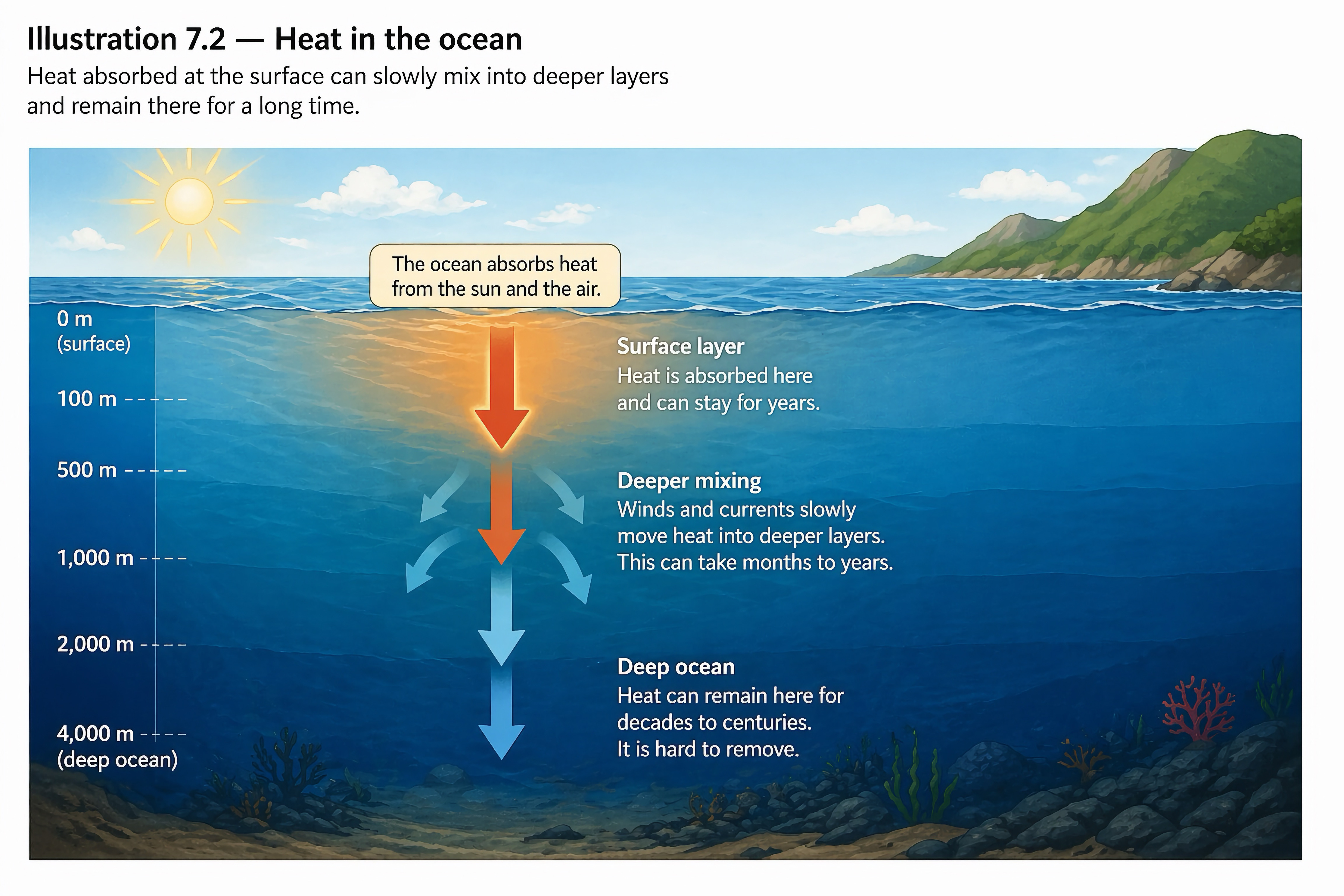
• Why water can store so much heat, and why the ocean acts like Earth’s shock absorber.
• Why ocean heat is not temporary: some stays in the system for decades or even centuries.
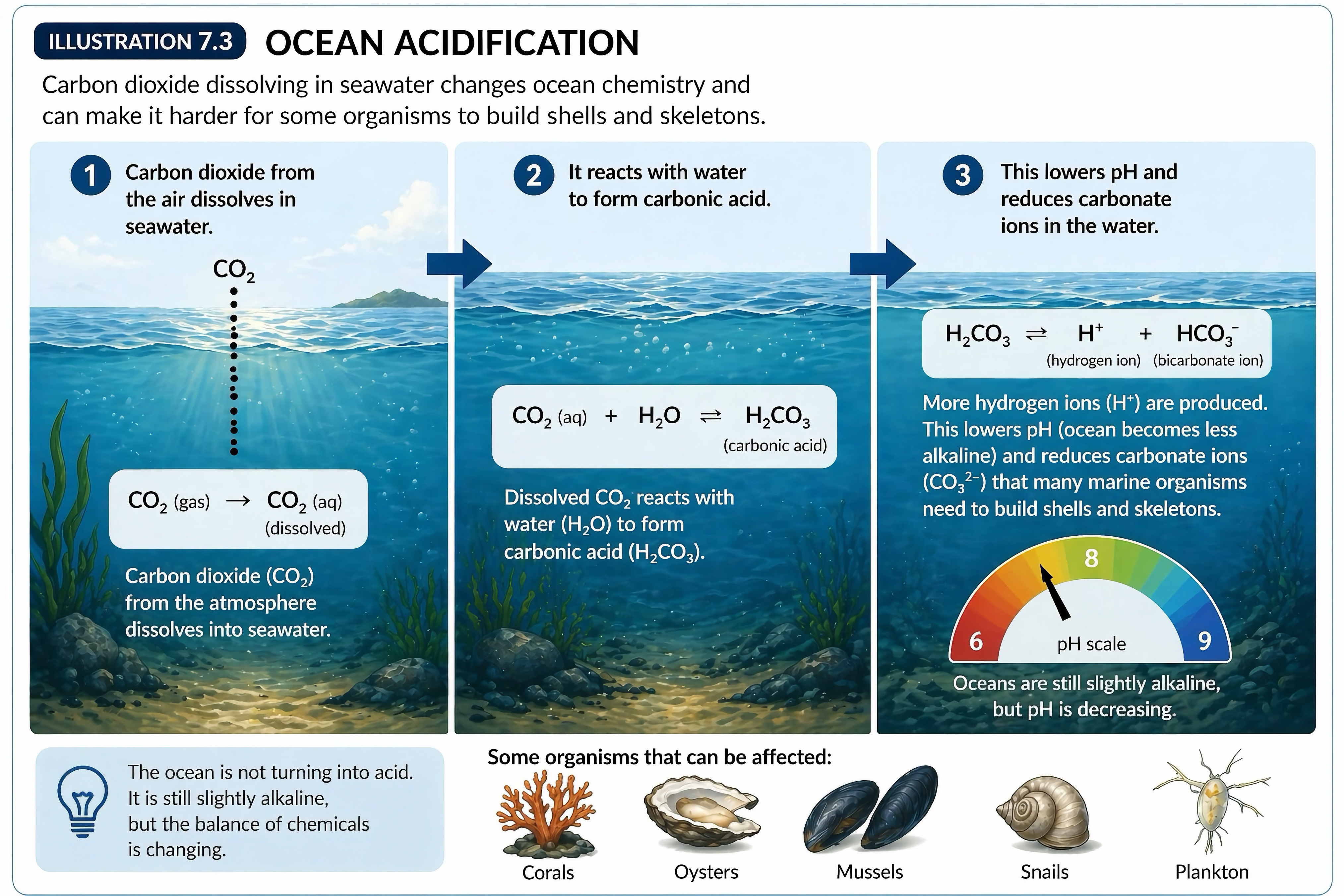
• How the ocean also absorbs CO2, making seawater less alkaline — a process called ocean acidification.
• Why that matters for corals, oysters and other shell-building organisms.
• How warming seas affect coral reefs, kelp forests, fish movements and oxygen levels.
🌟 One Bright Thing:
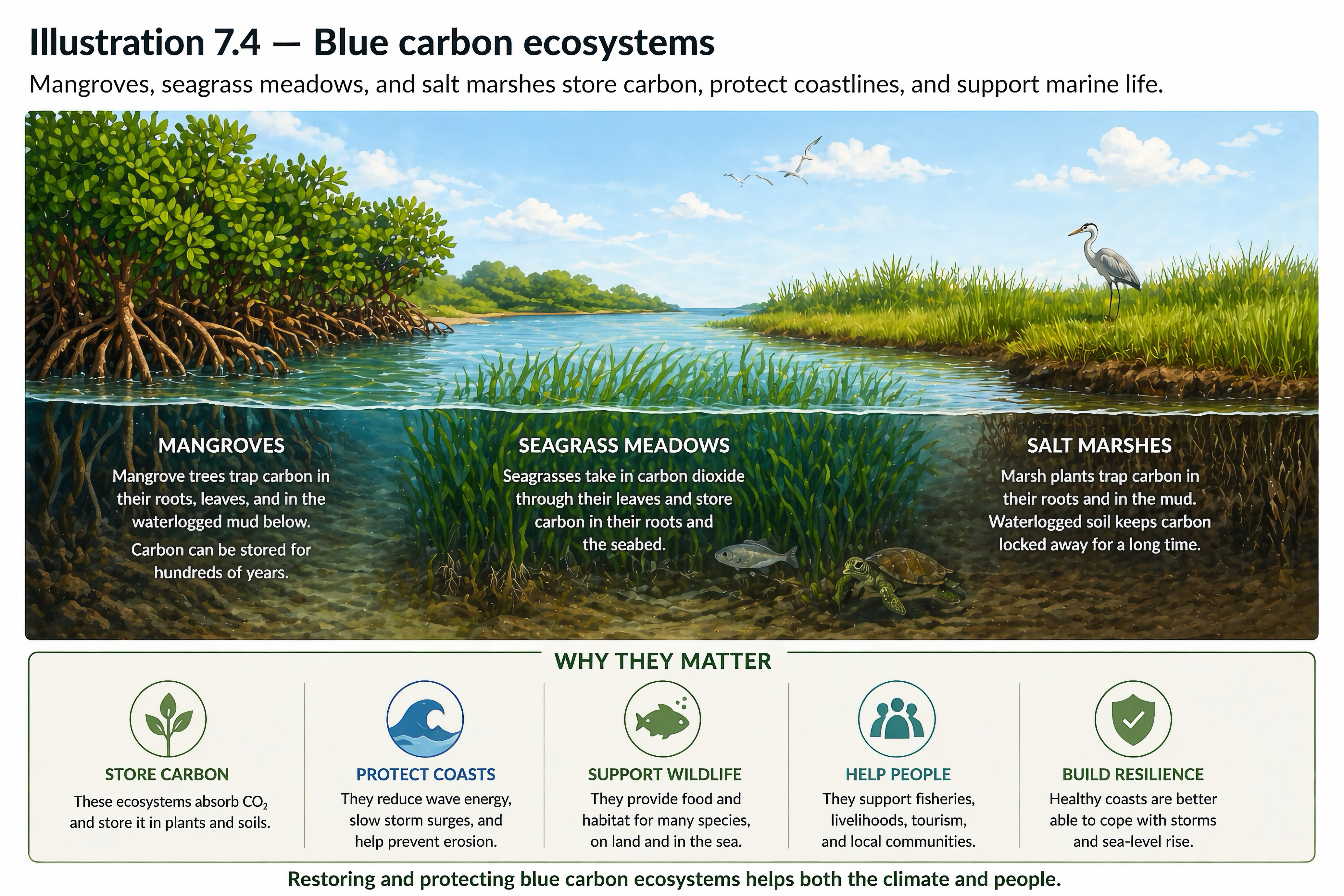
Blue carbon ecosystems — such as mangroves, seagrass meadows and salt marshes — can lock away carbon, protect coasts and support wildlife and fisheries. They show that helping nature can also help people. Offshore wind is another bright sign: cleaner electricity means less extra heat for the ocean to absorb.
🔢 Key numbers mentioned
• The ocean has absorbed more than 90% of the excess heat in the climate system.
• The ocean covers about 70% of Earth’s surface.
• Coral reefs cover less than 1% of the ocean, but support about 25% of marine life.
• Marine heatwaves have very likely doubled in frequency since 1982.
• Global offshore wind capacity has grown rapidly in recent years.
🧑🏫 Teacher Notes
Learning objective:
Pupils should understand that global warming is not just about warmer air: most excess heat is stored in the ocean, which affects sea life, sea level and the pace of climate change.
Keywords:
ocean heat, heat capacity, ocean acidification, coral bleaching, blue carbon
Discussion prompts:
1.Why might the ocean warming up be harder to notice than the air warming up?
2.Why is it helpful to think of mangroves and seagrass as climate helpers as well as wildlife habitats?
Extra teacher context:
The global ocean has warmed steadily for decades and has absorbed more than 90% of the excess heat trapped by greenhouse gases. The ocean also absorbs some of the extra CO2 we produce, which changes seawater chemistry and makes life harder for some corals and shell-building animals. This makes the ocean central to understanding how climate change works.
📚 Sources & further reading
- IPCC — Ocean warming, acidification and marine heatwaves Summary for Policymakers — IPCC Special Report on the Ocean and Cryosphere https://www.ipcc.ch/srocc/chapter/summary-for-policymakers/
- NOAA — Ocean heat content and the ocean’s role in absorbing excess heat Ocean Heat — NOAA Global Ocean Monitoring and Observing Program https://globalocean.noaa.gov/the-ocean/ocean-heat/
- NOAA NCEI – Global Ocean Heat and Salt Content — https://www.ncei.noaa.gov/access/global-ocean-heat-content/
- NOAA Ocean Service — Coral reefs and why they matter Why are coral reefs important? — https://oceanservice.noaa.gov/education/tutorial_corals/coral07_importance.html UNEP — Blue carbon ecosystems and coastal protection Protecting & Restoring Blue Carbon Ecosystems — UNEP https://www.unep.org/explore-topics/oceans-seas/what-we-do/protecting-restoring-blue-carbon-ecosystems
- UNEP – Why protecting & restoring blue carbon ecosystems matters — https://www.unep.org/explore-topics/oceans-seas/what-we-do/protecting-restoring-blue-carbon-ecosystems/why-protecting
- IRENA — Offshore wind growth Wind energy — IRENA https://www.irena.org/Energy-Transition/Technology/Wind-energy
- IRENA – The Role of Offshore Wind in the Energy Transition — https://www.irena.org/Digital-content/Digital-Story/2024/Jul/The-Role-of-Offshore-Wind-in-the-Energy-Transition