🐾 Belle’s Question: Why does climate change make heatwaves, droughts, and wildfires more likely?
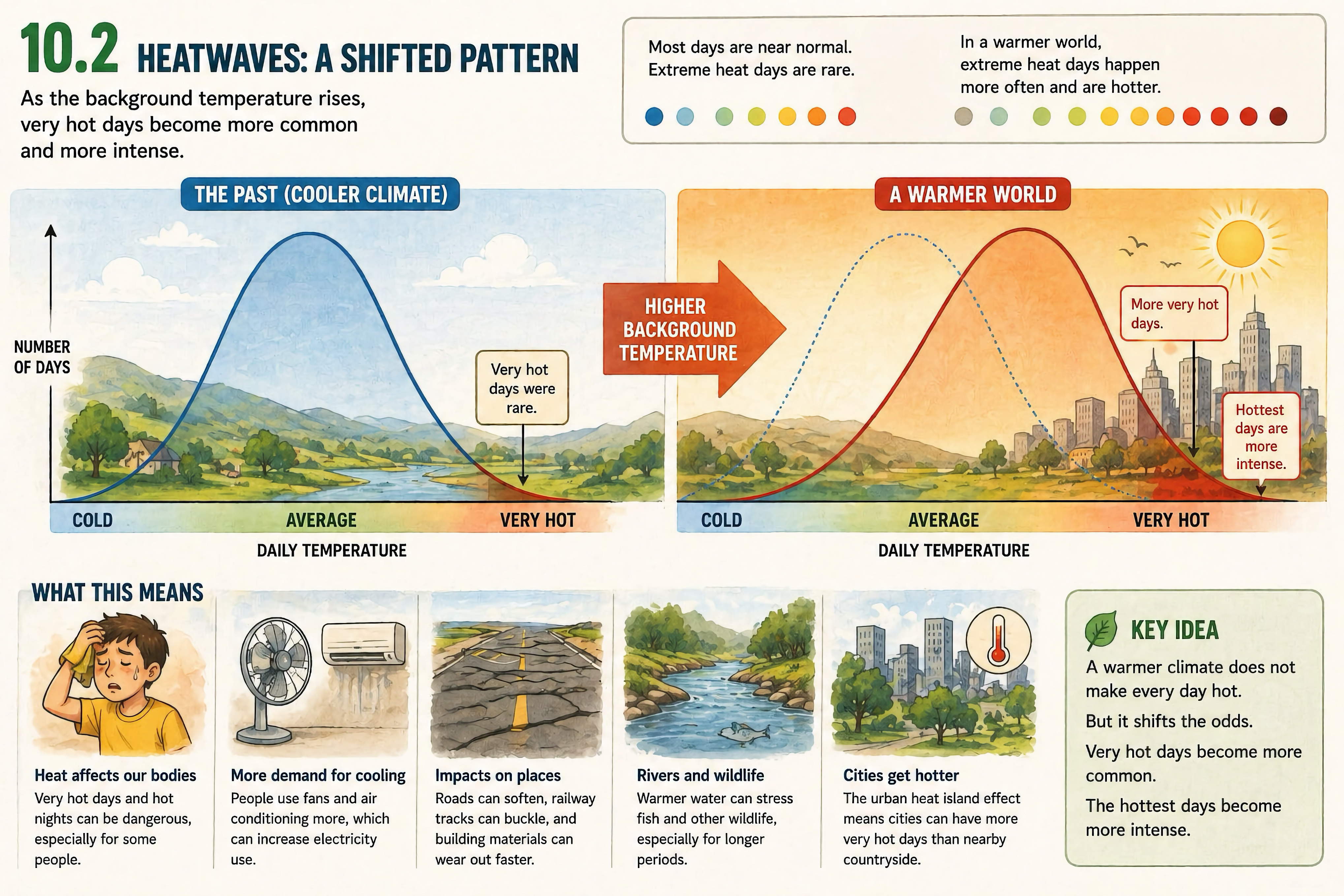
💡 If you remember one thing: A warmer world increases the risk of more intense heat, faster drying, more severe drought in many places, and, in some regions, more dangerous fire weather.
🔍 What we cover
Why heatwaves, droughts and wildfires are often connected parts of the same climate story.
Why warming shifts the background conditions that shape risk.
How heatwaves become more likely when the whole temperature pattern moves upward.
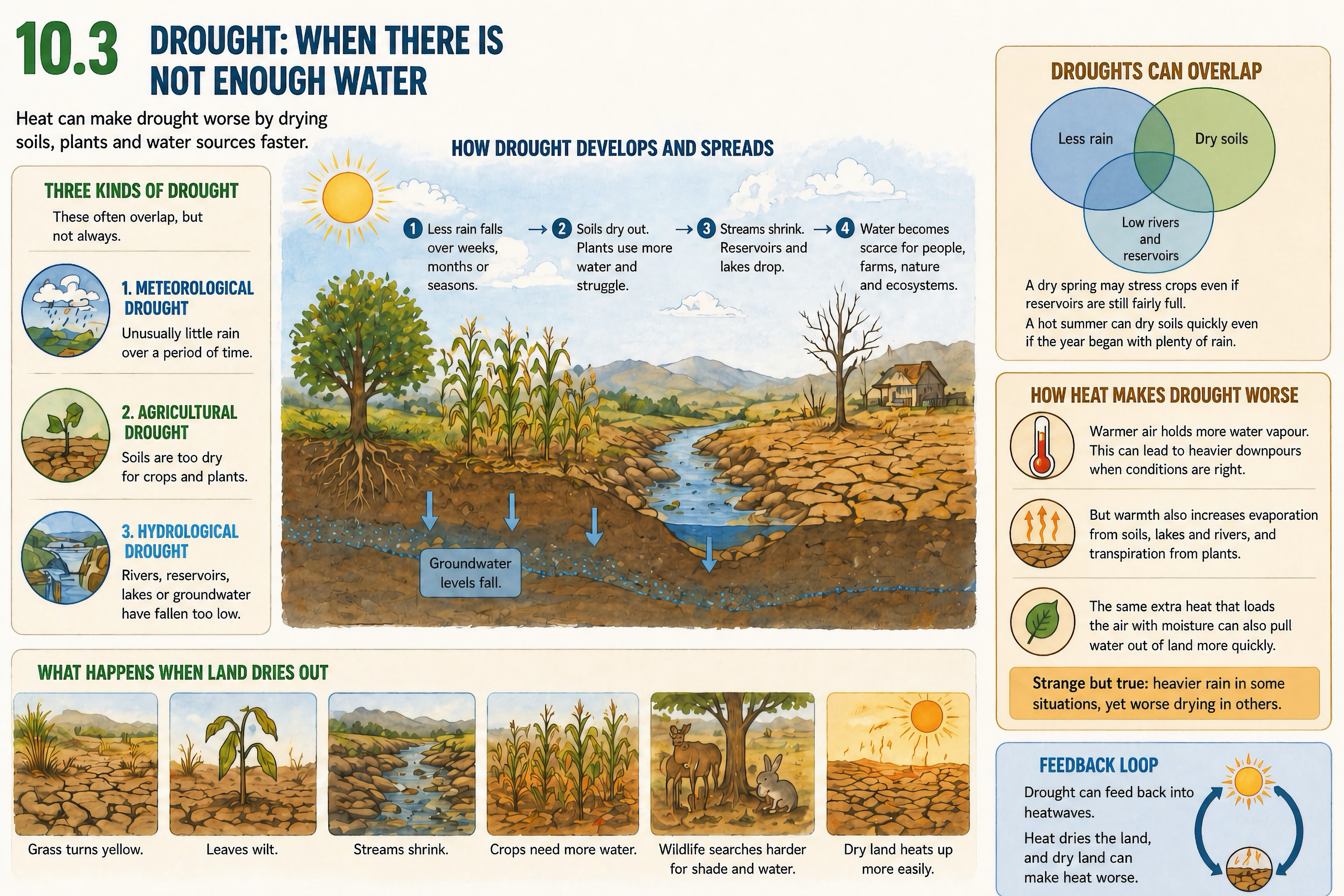
Why drought is not only about low rainfall, but also about faster drying from soils, plants and water surfaces.
How a warmer atmosphere can draw more moisture from the land, helping explain drying and drought.
Why heat and drought can reinforce each other.
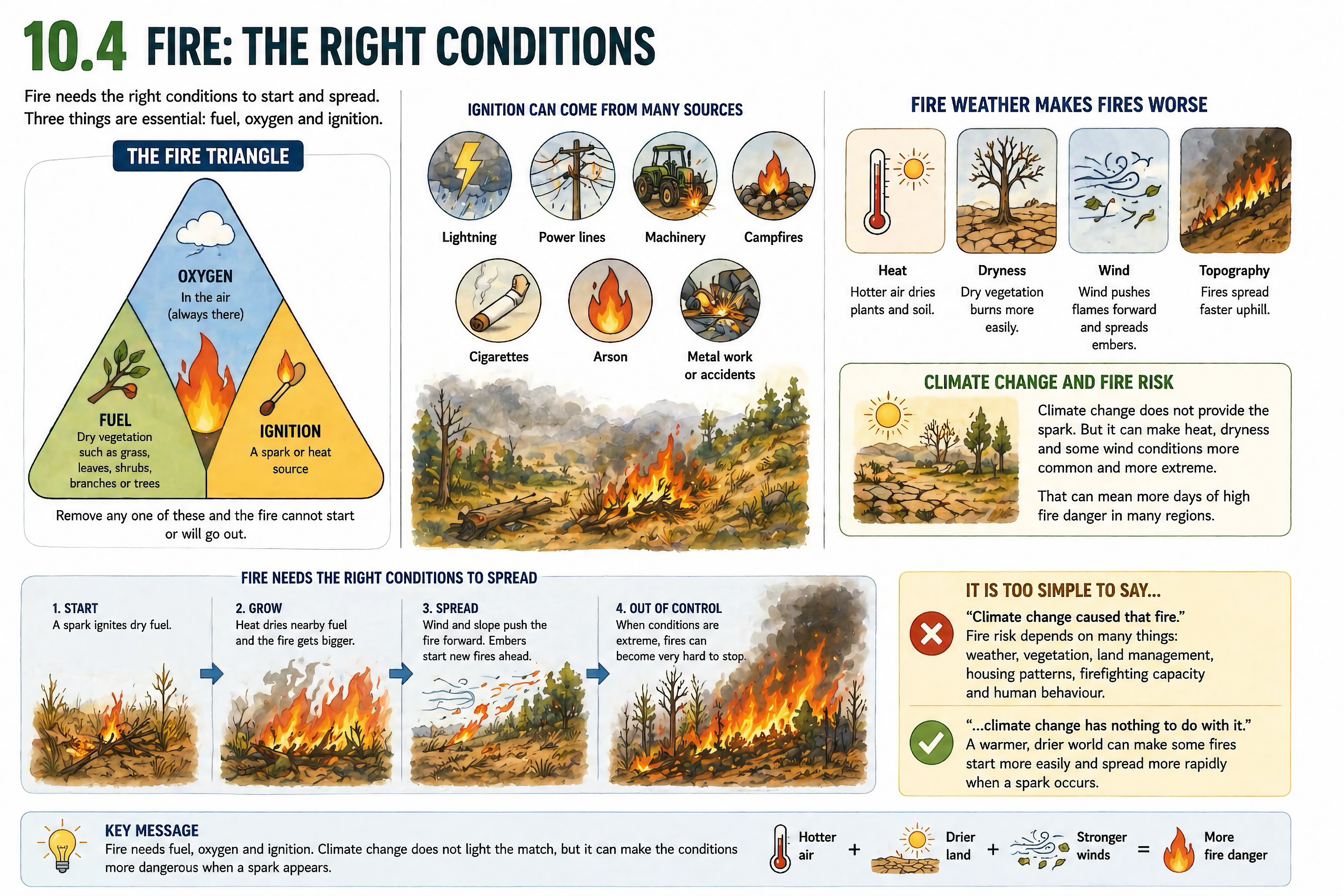
Why wildfires usually need three things: a spark, fuel, and the right hot, dry, windy weather.
Why climate change does not usually light the spark, but can make land and vegetation more likely to burn.
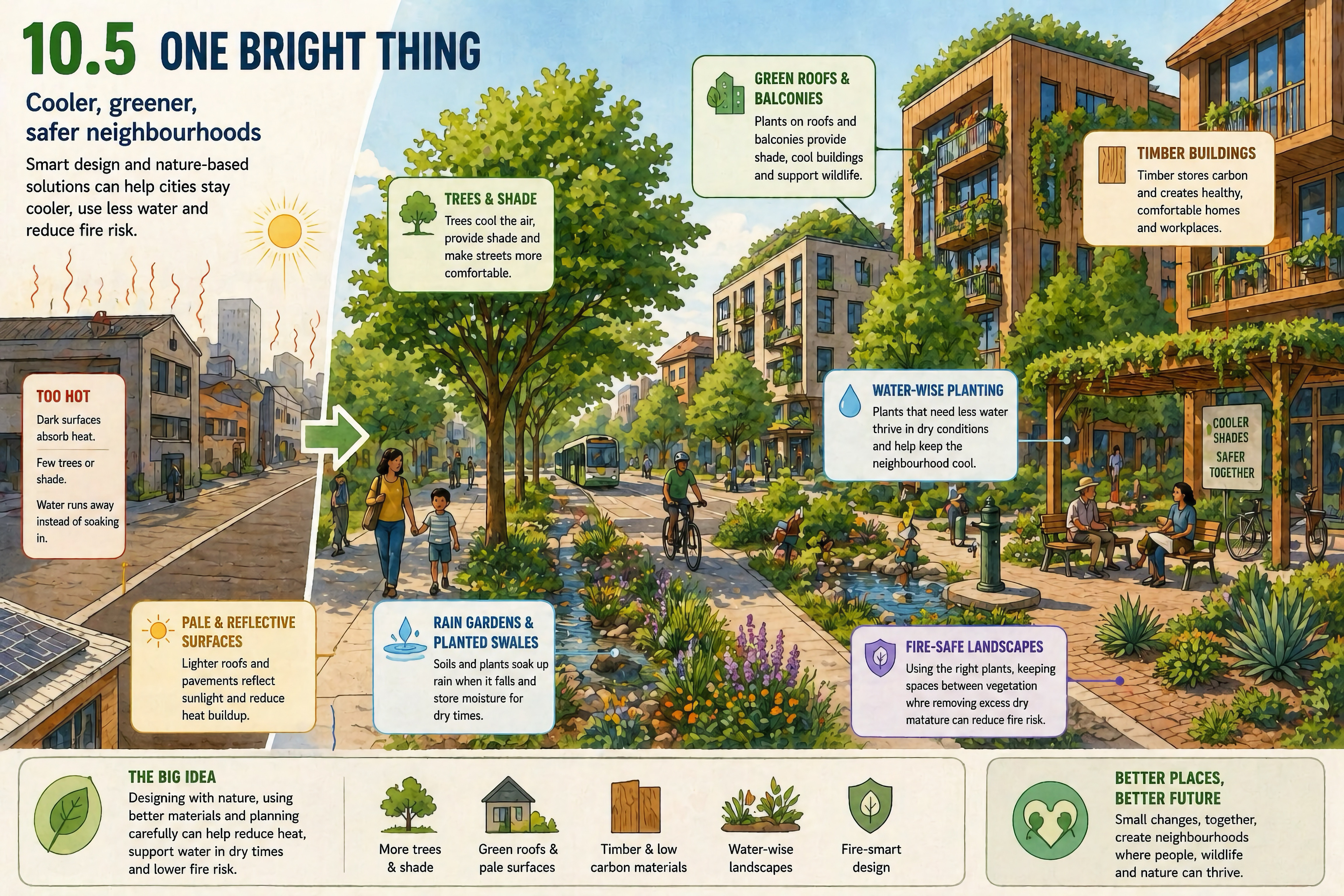
✨ One Bright Thing
This week’s bright thing is really three bright things working together.
For drought, people are developing crops and farming methods that cope better with heat and less water. CGIAR breeders test crops under drought and heat stress to find stronger varieties.
For fire, some land managers are reducing built-up fuel with careful low-intensity burns and better vegetation management. Hazard reduction burns can reduce fuel loads and fire intensity, helping protect communities.
For heatwaves, early warning systems are improving. More than sixty percent of countries now report having multi-hazard early warning systems, and even a day’s warning can significantly reduce damage.
🔢 Key numbers mentioned
The IPCC says it is virtually certain that hot extremes, including heatwaves, have become more frequent and more intense across most land regions since the 1950s.
Drylands now cover about 40% of global land area (excluding Antarctica), reflecting long-term drying trends in many regions.
Early warning systems can reduce disaster damage by up to 30%, and countries with strong systems have far fewer deaths.
👩🏫 Teacher Notes
This episode is about connected climate risk. Climate change shifts the background conditions that make extreme heat more likely, can dry the land faster, and in some regions increase dangerous fire weather.
It separates ignition from spread in wildfires: climate change does not usually light the spark, but it can make fuel drier and fire weather more dangerous.
Key words: heatwave, drought, meteorological drought, agricultural drought, hydrological drought, ignition, fuel, fire weather.
Discussion prompts: Why is drought not just “no rain”? Why is it important to separate the spark that starts a fire from the conditions that make it spread?
📚 Sources & further reading
IPCC — Summary for Policymakers, AR6 Working Group I
https://www.ipcc.ch/report/ar6/wg1/downloads/report/IPCC_AR6_WGI_SPM.pdf
IPCC — Chapter 11: Weather and Climate Extreme Events
https://www.ipcc.ch/report/ar6/wg1/downloads/report/IPCC_AR6_WGI_Chapter11.pdf
UNCCD — Global aridity trends report
https://www.unccd.int/sites/default/files/2024-12/aridity_report.pdf
WMO / UN — Early Warnings for All
https://wmo.int/sites/default/files/2025-10/EW4All%20Brochure.pdf