Why Is the Earth Warming? The Greenhouse Effect Explained
If you remember one thing:
Greenhouse gases act like a heat-trapping blanket — add more, and Earth keeps more heat.
When the Sun warms Earth during the day, where does that heat go at night — and why doesn’t it all escape back into space?
This episode explains the greenhouse effect calmly and simply, using everyday ideas — no jargon required.
🐾 Belle’s Question
“Why doesn’t all the Sun’s heat just bounce back into space?”
🌍 The big idea (explained simply)
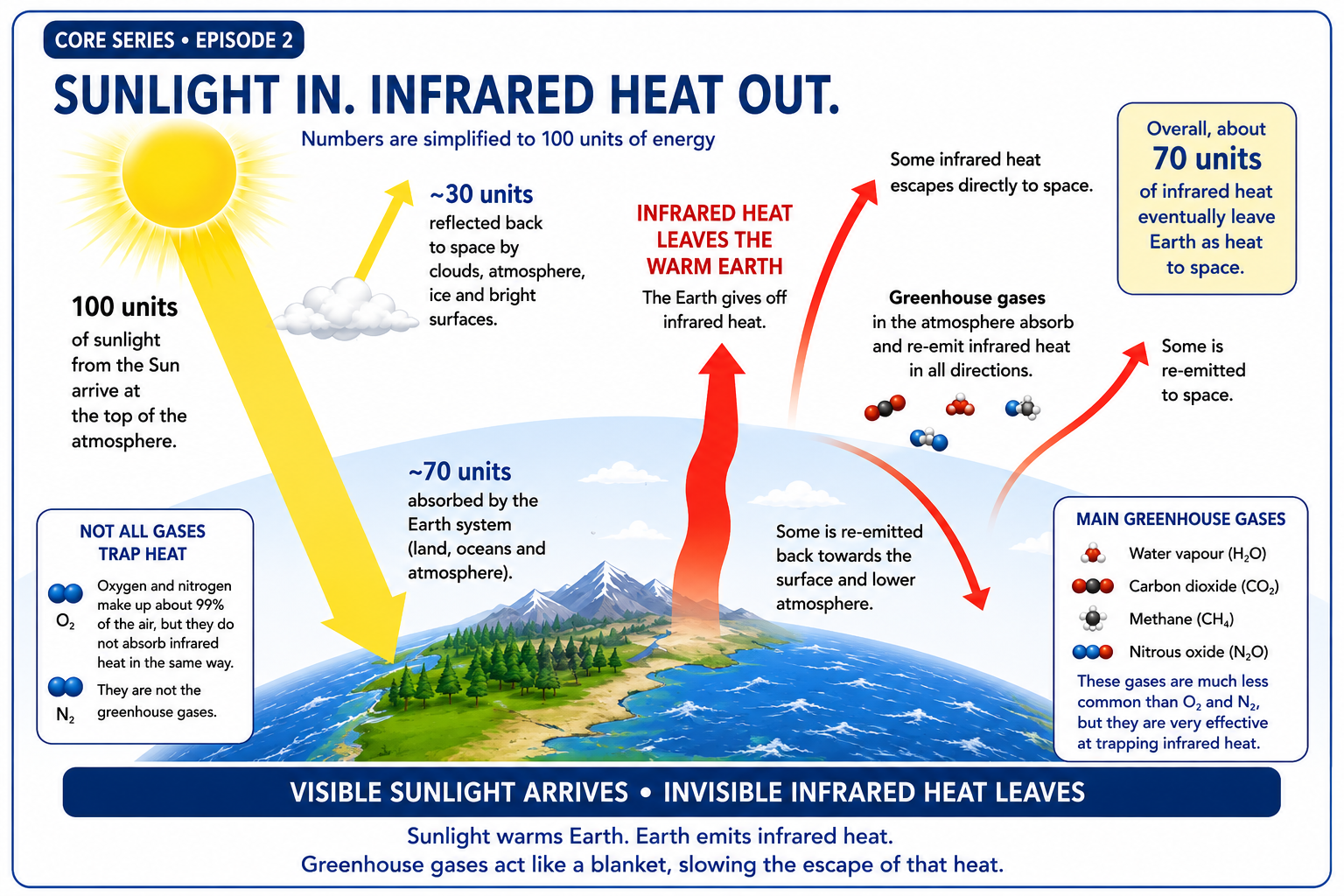
Sunlight mostly arrives as visible light and warms Earth’s surface. A warm surface doesn’t glow like a lightbulb — it gives off energy as infrared heat.
Some gases in the atmosphere — especially carbon dioxide, methane, and water vapour — can absorb that outgoing infrared and re-emit it in all directions, including back downwards. That slows heat escaping to space.
The result is like adding a thin blanket. Earth warms until energy going out balances energy coming in again. Add more greenhouse gas, and the blanket thickens.
🌱 One Bright Thing
Climate solutions don’t have to look dull — some look like the future.
Cities are experimenting with:
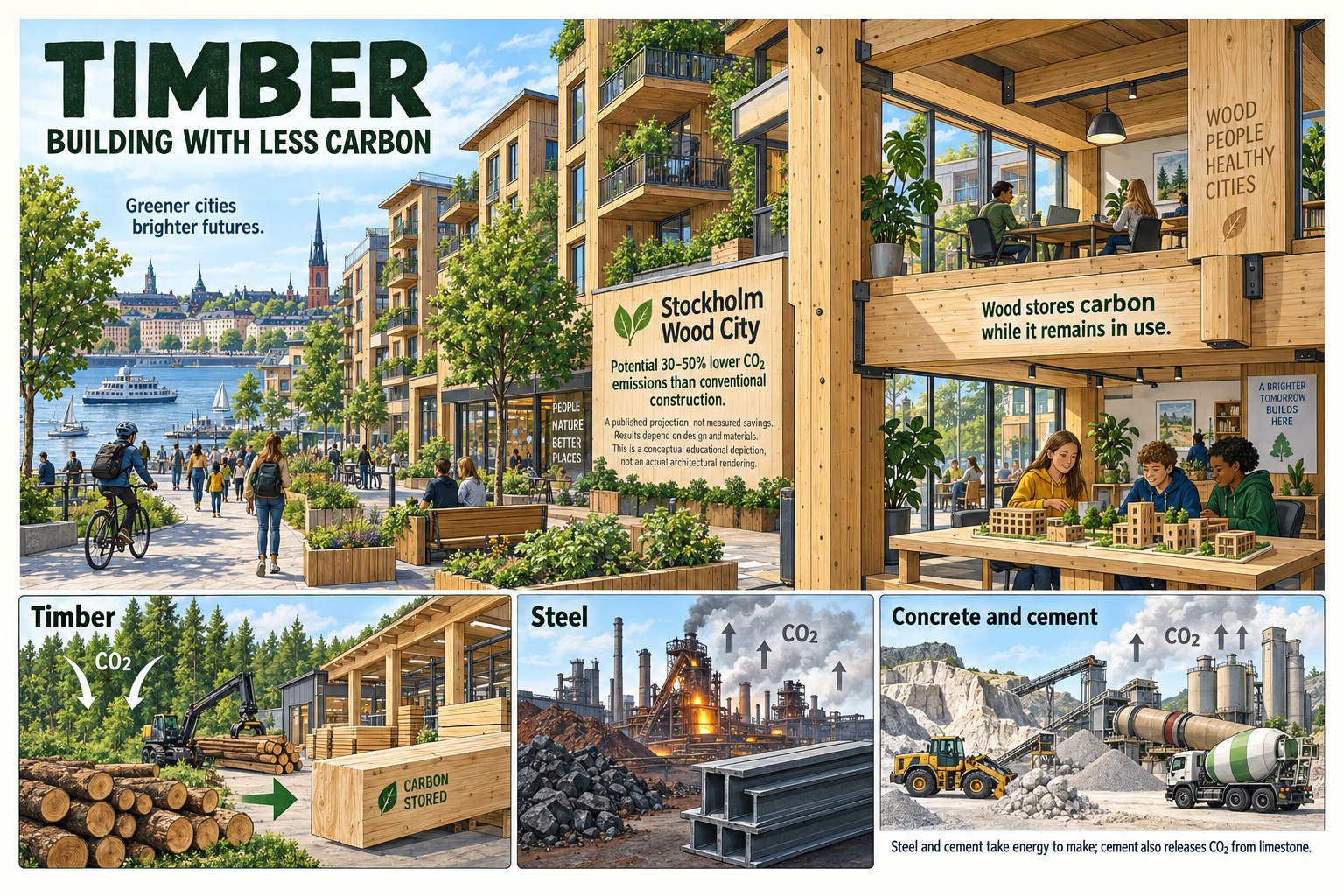
Timber districts, where buildings store carbon in long-lasting wood
“Vertical forest” buildings, with trees and plants that help cool cities and support wildlife
“Sponge city” design, using parks, ponds, and green roofs to soak up heavy rain and reduce flood risk
These ideas won’t solve climate change on their own — but they show how smart design can reduce risks and improve daily life.
🏫 Quick quiz (for families & classrooms)
• The Sun’s energy comes in mostly as sunlight — or infrared heat?
• Earth sends energy back out mostly as sunlight — or infrared heat?
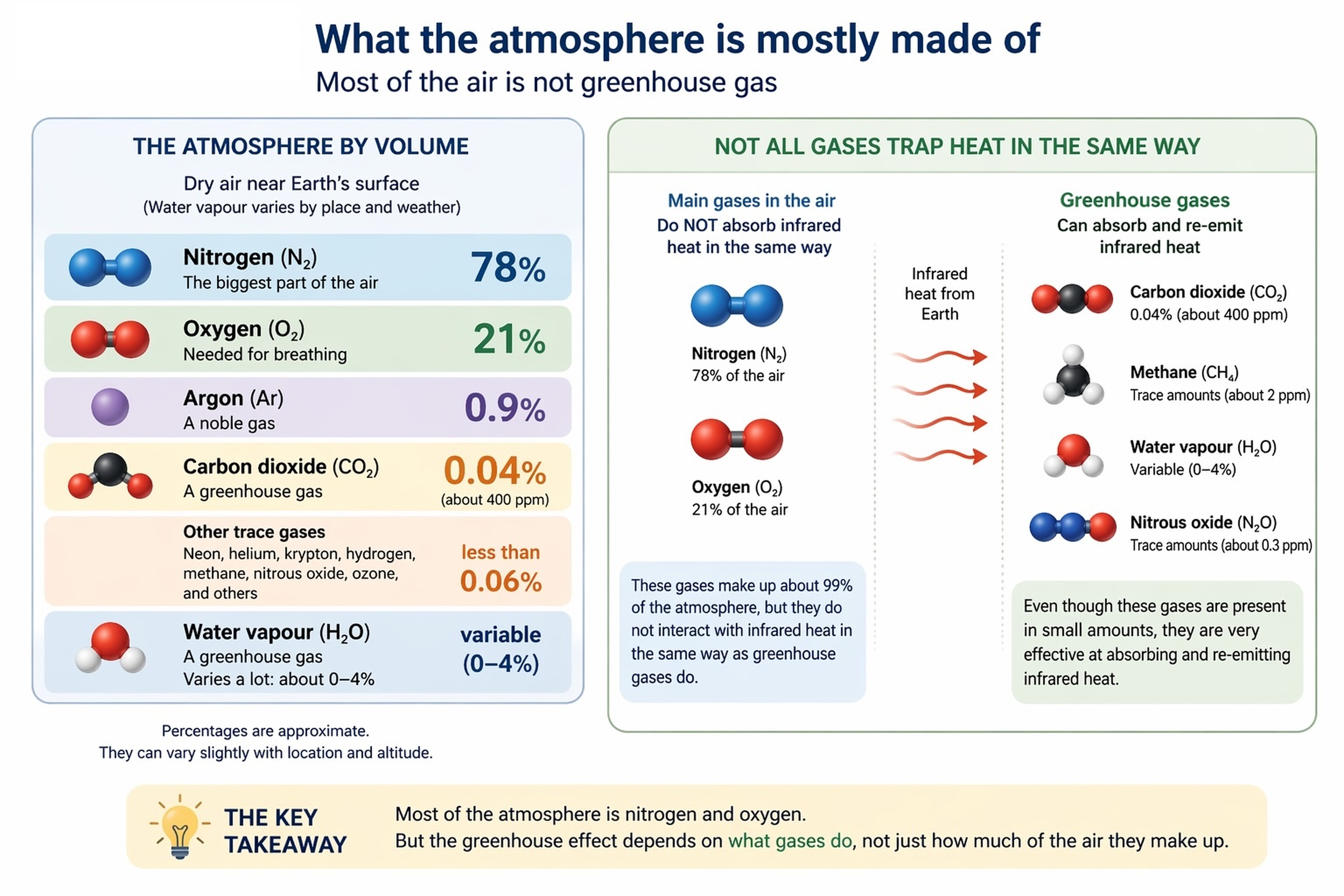
• Why is “CO2 is only 0.04% of the air” not a good argument that it can’t matter?
🔔 Follow & Ask Belle
If this helped, follow The Climate Classroom on Spotify or Apple Podcasts — so the next school-run episode arrives automatically.
Got a question for Belle? Send it on Spotify, or at https://www.theclimateclassroom.org — with “the” at the start.
—————
READ MORE / FULL NOTES
—————
🎧 In this episode
• Earth’s temperature is an “in and out” energy balance (like a bath: tap + plug)
• Sunlight warms the surface; the warm surface emits infrared heat
• Greenhouse gases absorb and re-emit some infrared — like a blanket
• Why a small amount of CO2 can still have a big effect
• Where water vapour fits in (it mostly responds to temperature)
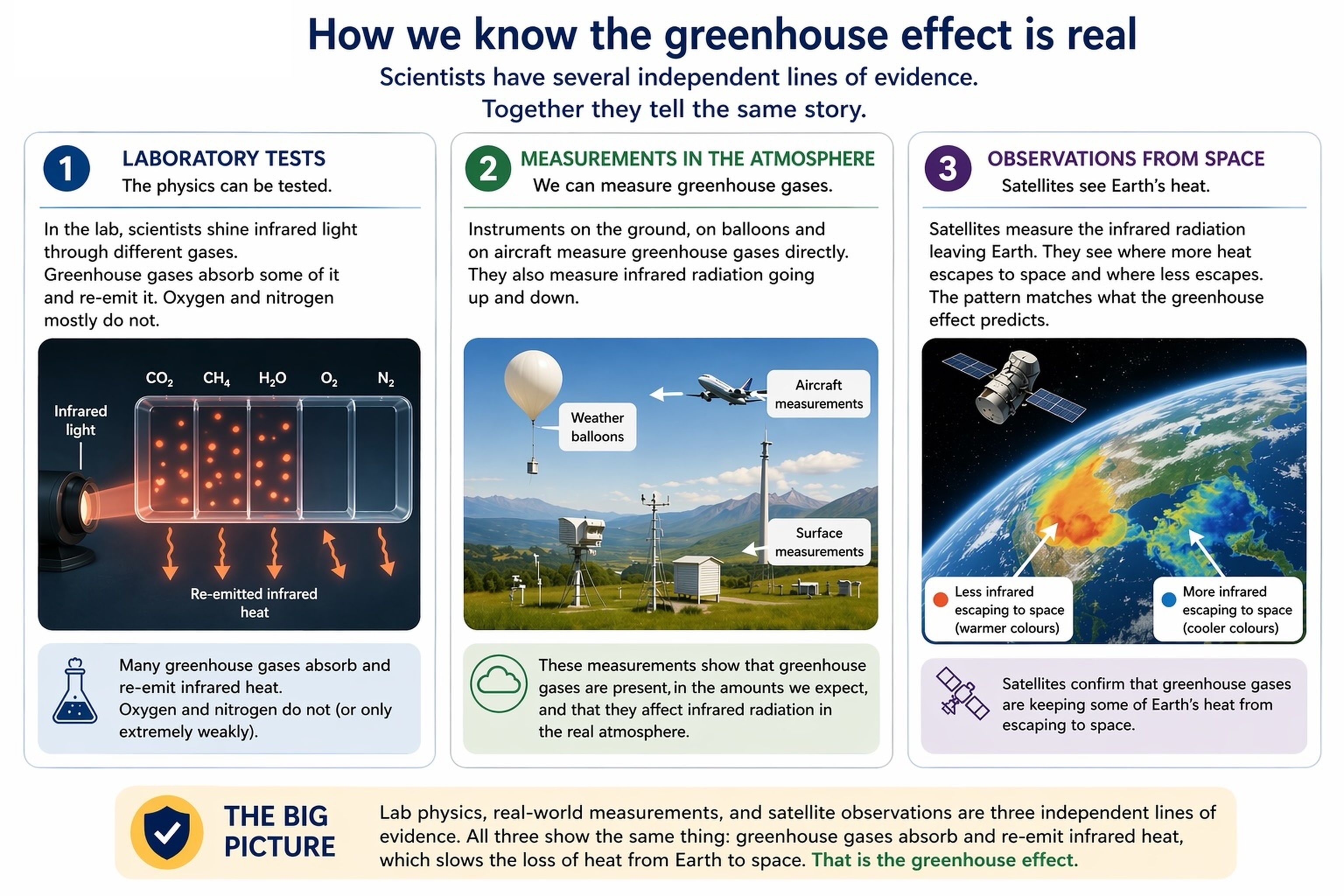
• How we know this isn’t guesswork: lab physics, air measurements, and satellite “fingerprints”
📚 Sources & further reading (with links)
Greenhouse effect basics
• NASA — What is the greenhouse effect?
https://climate.nasa.gov/faq/19/what-is-the-greenhouse-effect/
• UK Met Office — Greenhouse gases & shortwave/longwave explanation
https://www.metoffice.gov.uk/weather/climate-change/what-is-climate-change
• The Royal Society — Basics of climate change
https://royalsociety.org/topics-policy/projects/climate-change-evidence-causes/
Shortwave vs longwave (“nerd note”)
• Lund University — Radiation theory (Sun peak ~0.55 μm; Earth peak ~10 μm)
https://www.nateko.lu.se/sites/nateko.lu.se/files/radiation_theory.pdf
• Penn State (EARTH 103) — Blackbody radiation & Wien’s displacement law
https://www.e-education.psu.edu/earth103/node/559
Built-environment “One Bright Thing” examples
• Atrium Ljungberg — Stockholm Wood City / Sickla project
https://www.atriumljungberg.se/en/projects/stockholm-wood-city/
• White Arkitekter — Stockholm Wood City overview
https://whitearkitekter.com/project/stockholm-wood-city/
• Wonderwoods (Utrecht) — Project overview
https://www.wonderwoods.com/
• Trust for Public Land — Rodney Cook Sr. Park (stormwater storage)
https://www.tpl.org/our-work/rodney-cook-sr-park
• UNDRR / PreventionWeb — What are sponge cities?
https://www.preventionweb.net/news/what-are-sponge-cities
🏫 For families & classrooms (discussion prompts)
• Why does it matter how heat leaves Earth, not just how much sunlight arrives?
• Which analogy works best for you — blanket, bath, or energy balance — and why?
Continue in the Core Series: Ancient Carbon — Where CO2 Comes From (and why it matters)
Teacher notes
Learning objective: Explain how greenhouse gases absorb and re-emit outgoing infrared radiation, slowing heat loss to space.
Keywords: sunlight, infrared, greenhouse gas, energy balance.
Activity: Use the greenhouse-effect illustration to trace incoming sunlight and outgoing infrared. Ask pupils to explain why Earth warms when less energy leaves than arrives.
Quiz answers: Sunlight; infrared heat; a gas can have a strong effect at a small concentration because its properties determine how it interacts with infrared.
Teaching point: The blanket analogy describes slower heat loss, not a solid lid or endless warming. Earth warms until outgoing energy again balances incoming energy.