🎧 Episode 12 — Show Notes
Episode title: Food Choices & Climate
🐾 Belle’s Question: Do the food choices we make really affect the climate?
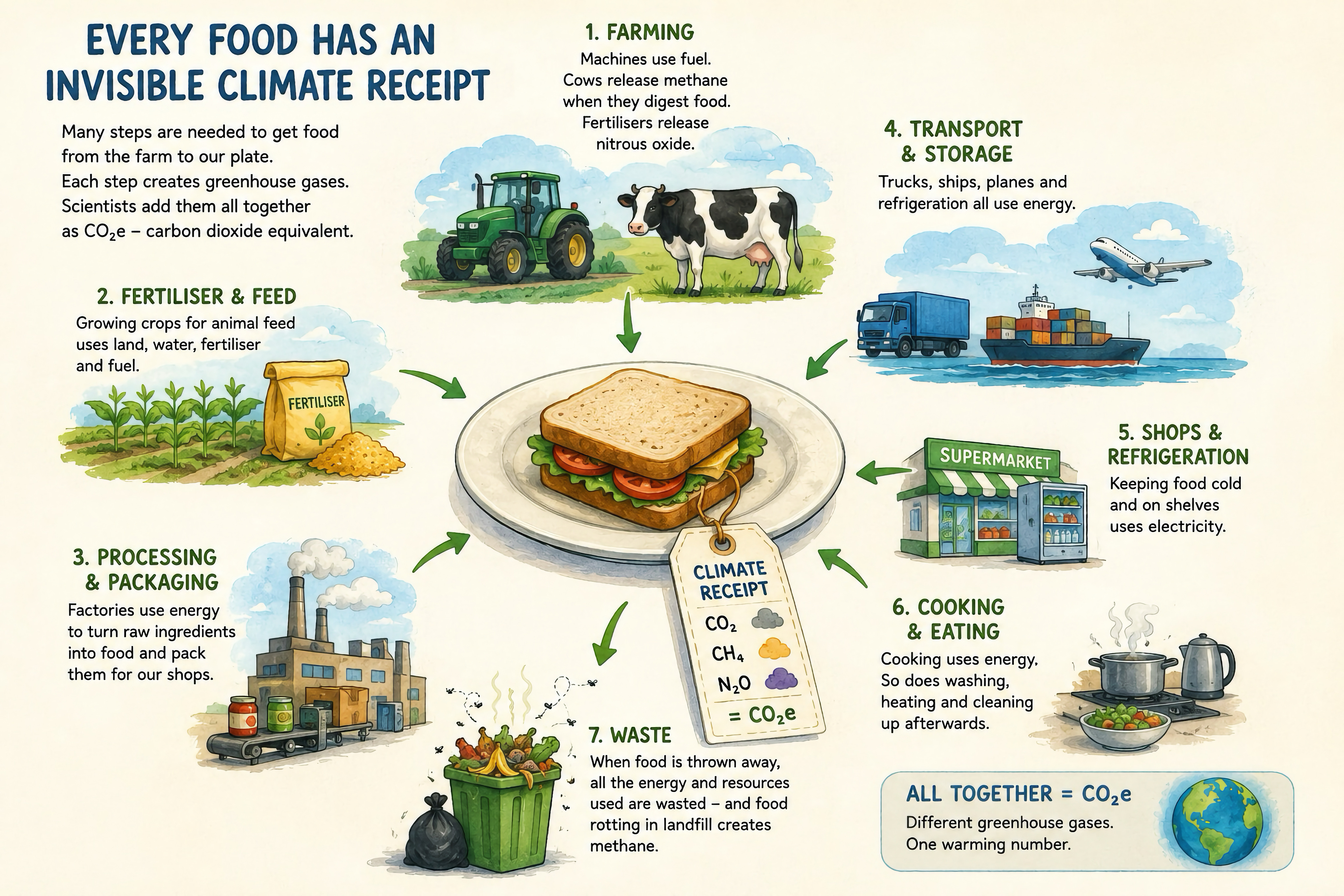
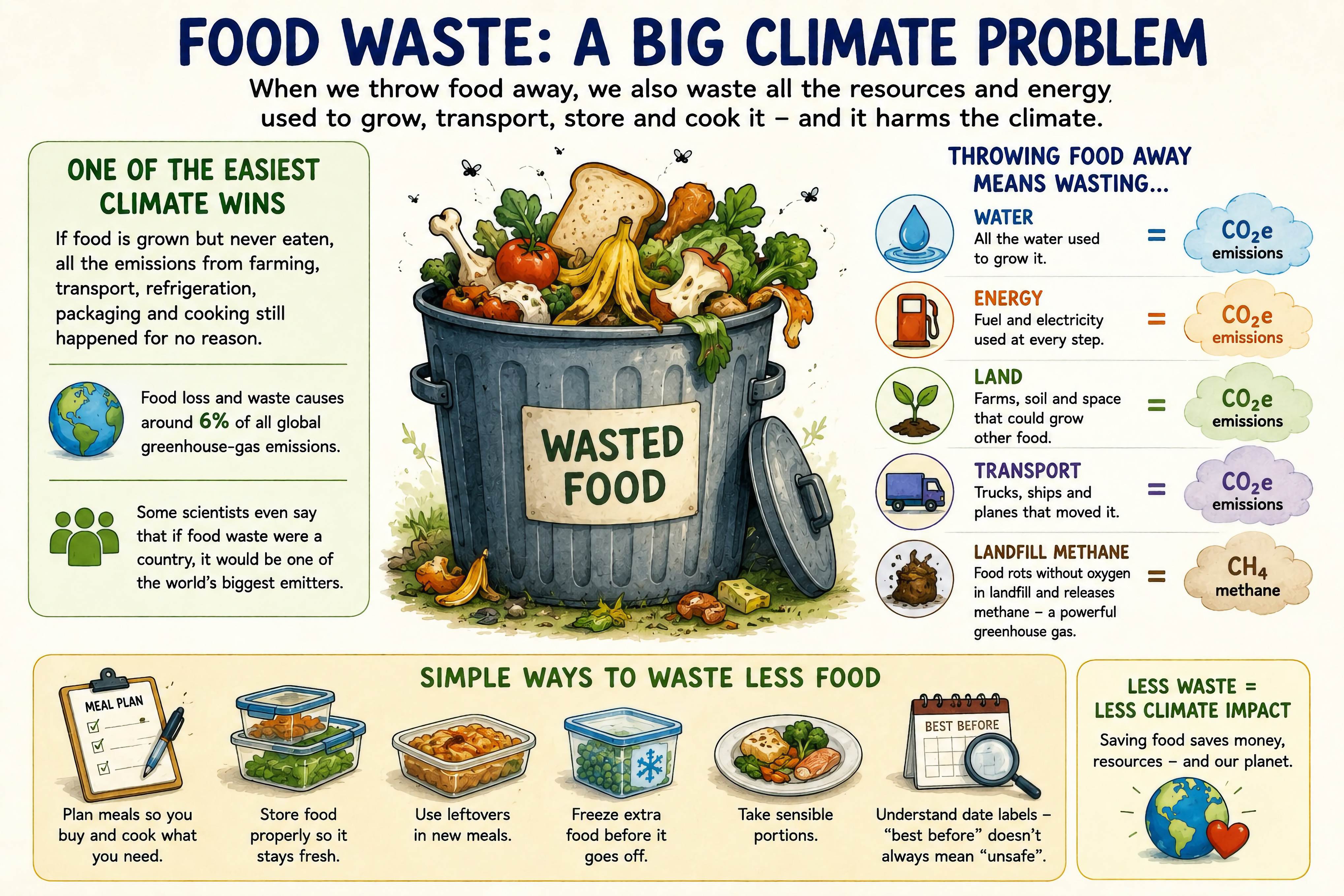
📌 If you remember one thing: Different foods have very different climate footprints — because of how they are produced — so small, sensible changes can make a real difference.🔍 What we cover: What CO2e means, and why every food has an invisible “climate receipt”. Why food systems produce roughly a quarter to a third of human greenhouse-gas emissions. Why beef and lamb usually have higher emissions than chicken, and why plant-based foods are often lower still. Why food miles are not usually the biggest factor, although air-freighted fresh food can be an exception. Why balance matters more than a “perfect diet”. And why wasting less food is one of the easiest climate wins.
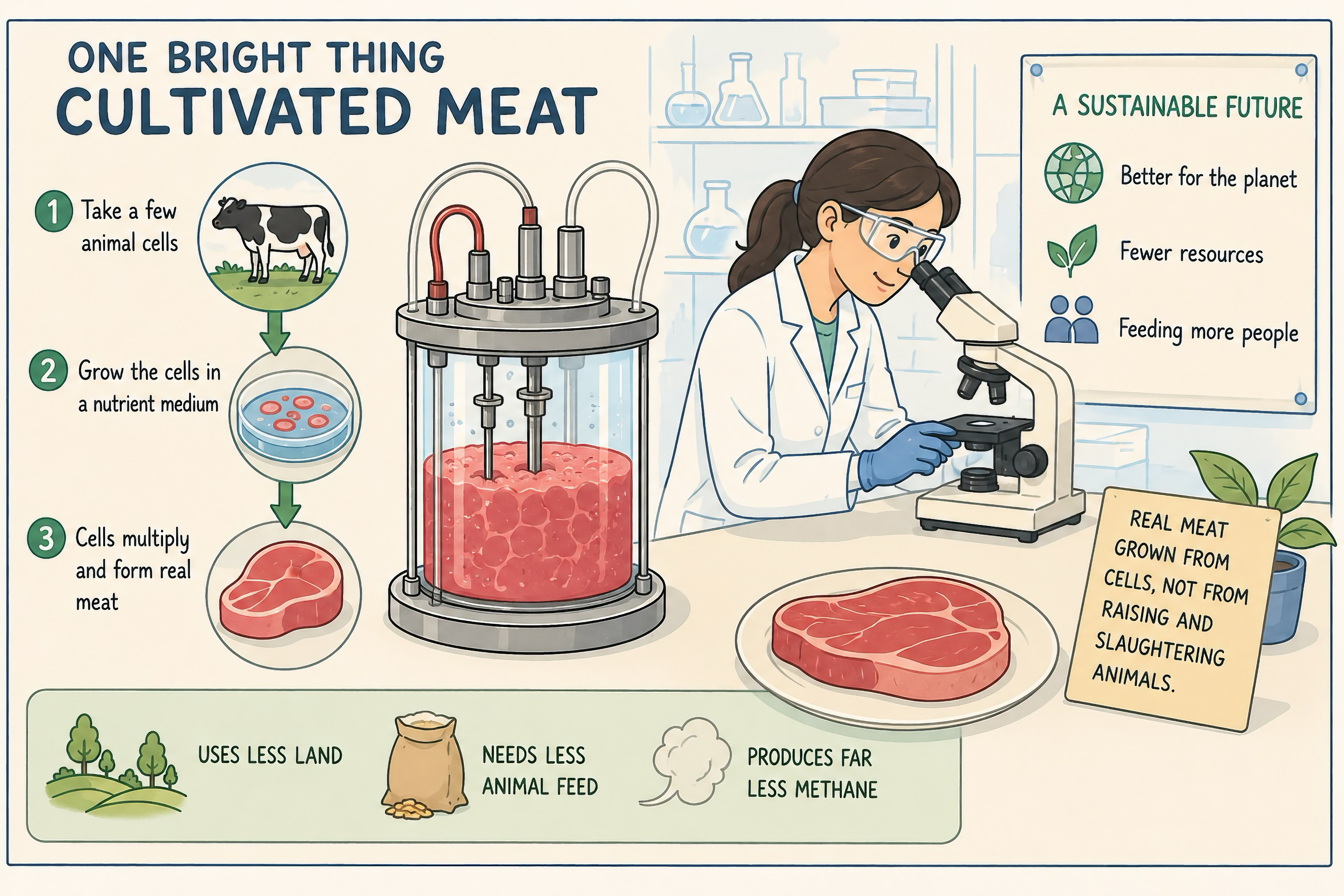
🌟 One Bright Thing: Cultivated meat is moving from science fiction towards reality. The idea is to grow real meat from animal cells in controlled conditions, instead of raising an entire animal. If this develops safely, affordably, and using clean energy, it could reduce pressure on land, reduce the need for animal feed, and cut methane from ruminant digestion. It is not a magic fix yet: scaling is difficult, costs need to fall, and regulators must check safety carefully. But it shows people are inventing ways to enjoy familiar foods with a smaller climate footprint.
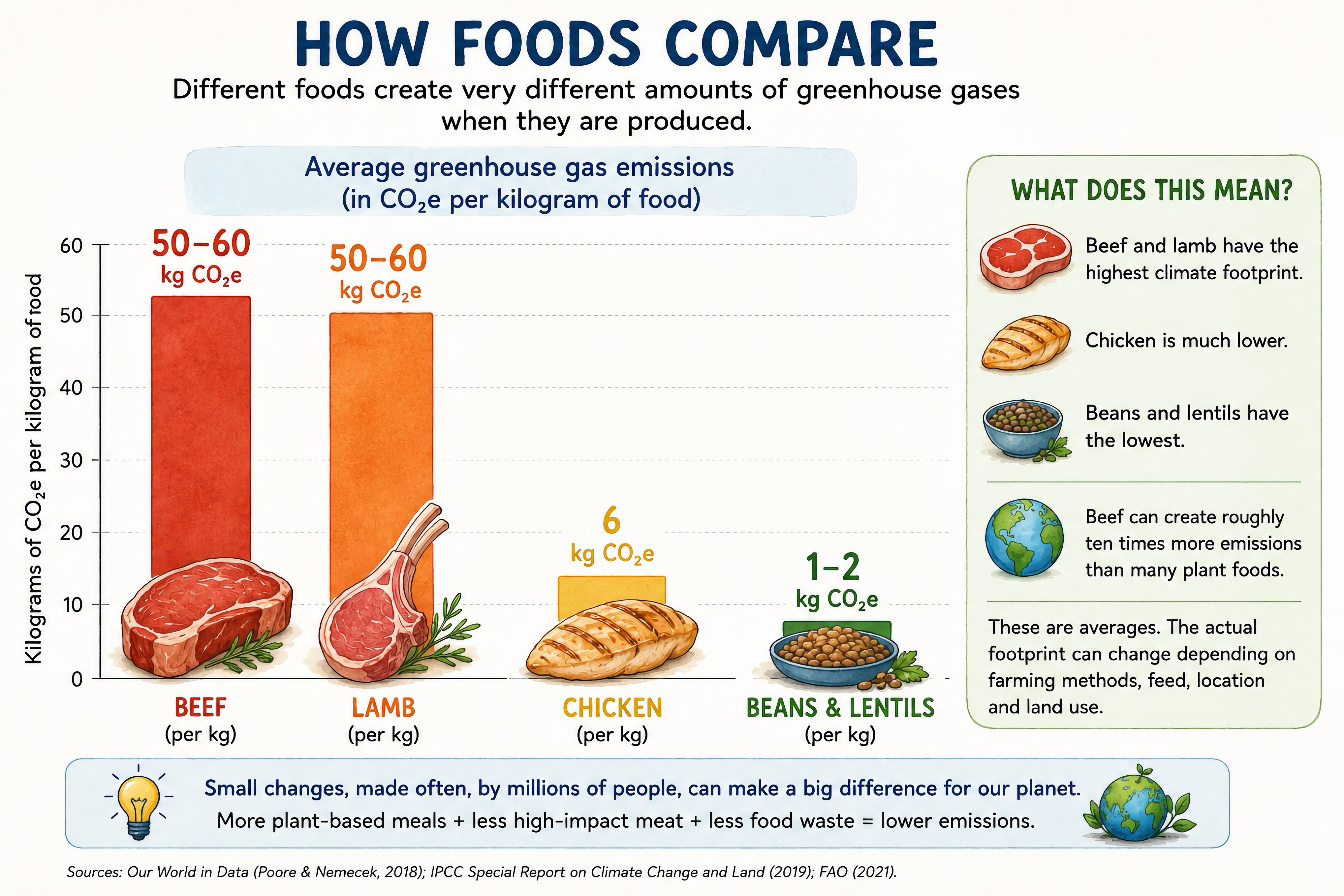
🔢 Key numbers mentioned: Food systems produce roughly a quarter to a third of global greenhouse-gas emissions. Food loss and waste causes around 6% of all global greenhouse-gas emissions, and roughly a quarter of food-system emissions are linked to food that is lost or wasted. Producing one kilogram of beef can create around 50–60 kilograms of greenhouse gases; chicken is often around 6; beans or lentils can be around 1–2. Beef can therefore be roughly ten times higher than many plant foods. Methane makes up roughly a third of food-system emissions overall, mainly from livestock, rice farming, and food waste rotting without oxygen.
🏫 👩🏫 Teacher Notes: This episode introduces food as a climate system. Pupils should understand that food emissions come from many stages: land use, farming, animal feed, processing, transport, refrigeration, retail, and waste. The key teaching point is that most food emissions usually happen before food reaches the plate. This means what the food is, and how it is produced, often matters more than distance travelled. However, transport still matters, especially when food is flown by air. The episode also introduces CO2e as a way of comparing different greenhouse gases, including carbon dioxide, methane and nitrous oxide. Methane from ruminant animals such as cows and sheep is a useful example because it helps explain why beef and lamb often have higher footprints than chicken, fish, beans or lentils.
Useful keywords: CO2e, food system, methane, ruminant, food miles, food waste, cultivated meat, air freight
Discussion prompts: Why might beef usually have a higher climate footprint than beans or lentils? Why is “local” not always the same as “low carbon”? Why does wasting food also waste the emissions used to produce it?
📚 Sources & further reading
IPCC — Climate Change and Land / food systems
Our World in Data — Environmental impacts of food
FAO — Food loss and food waste
UNEP — Food waste and climate impact
FAO — Livestock and methane / agrifood emissions
Good Food Institute — Cultivated meat
Reuters — Singapore becomes first country to approve sale of lab-grown meat